
Why DIY Dog Toys Are Growing in Popularity
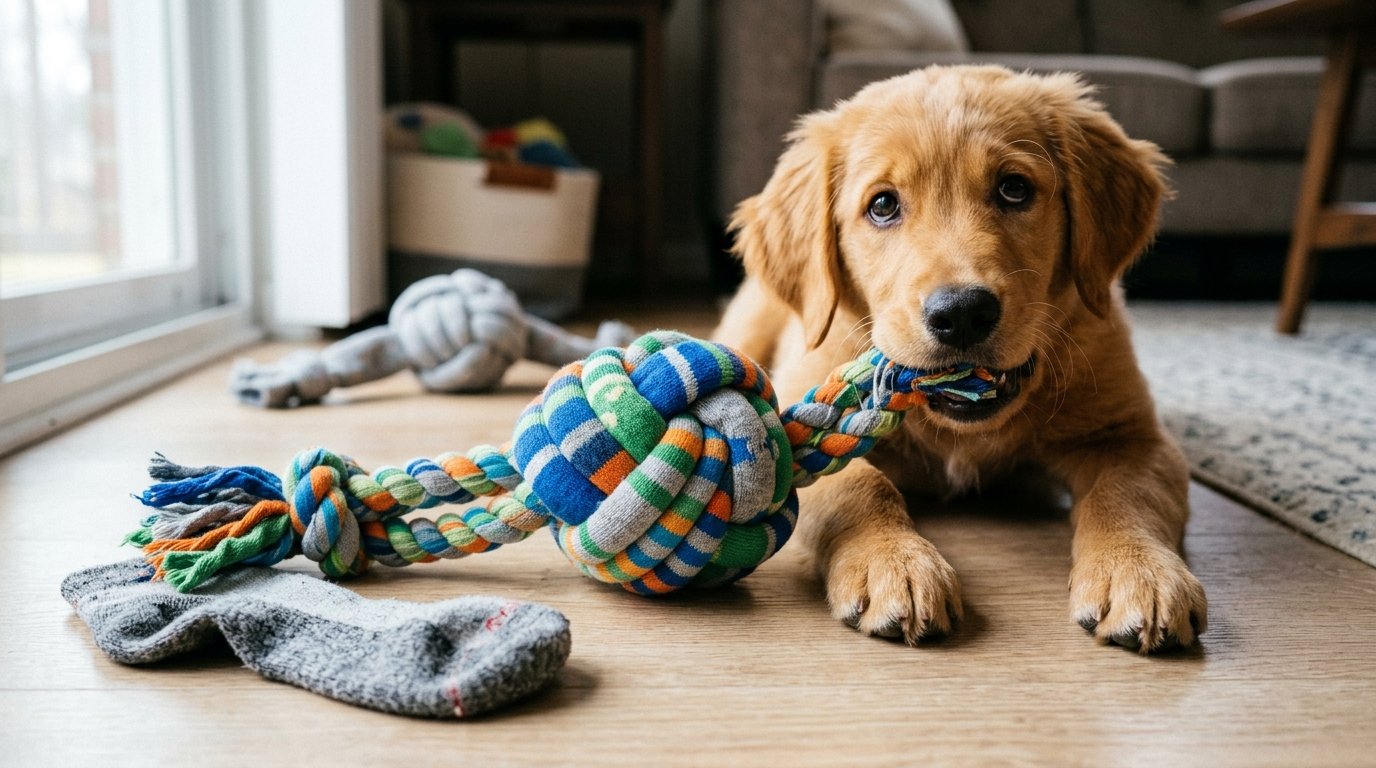
Have you ever looked at a drawer full of mismatched socks and wondered if they could serve a better purpose? Instead of throwing them away, you can transform those forgotten socks into engaging toys your dog will love. DIY dog toys have become increasingly popular because they combine creativity, sustainability, and affordability in one simple project. With a little imagination, an old sock can become a tug toy, treat puzzle, fetch toy, or even a comforting companion for your furry friend.
Today’s pet owners are also becoming more environmentally conscious. Repurposing household items helps reduce waste while giving everyday materials a second life. Rather than purchasing new toys every few weeks, many dog owners are discovering that homemade alternatives can provide just as much excitement when designed safely. Recent pet care guidance continues to recommend supervised use of homemade toys, especially for enthusiastic chewers, and encourages owners to inspect them regularly for signs of wear. Clean cotton socks without buttons, beads, zippers, or loose decorations remain one of the safest choices for DIY projects.
Beyond the financial savings, creating your own toys allows you to customize them to suit your dog’s personality. Some dogs enjoy games of tug, while others prefer chasing toys across the yard or solving treat puzzles. By tailoring each project to your pet’s preferences, you create a more enriching experience than many generic store-bought products provide.
Making these toys can also become a fun family activity. Children can help tie knots, select colorful socks, or stuff toys with safe materials while learning about recycling and responsible pet care. The result is more than just a toy—it’s a creative project that strengthens the bond between your family and your dog while reducing unnecessary waste.
Save Money While Reducing Waste
One of the biggest advantages of turning old socks into dog toys is the money you save. Quality pet toys can become expensive, especially if your dog loves chewing or frequently destroys toys during energetic play sessions. Replacing them every month—or even every week for powerful chewers—can quickly become a significant expense. Repurposing socks that would otherwise end up in the trash offers a practical solution that costs almost nothing.
Many households already have everything needed for several DIY toys. Single socks that lost their partners, worn athletic socks, or colorful cotton socks can all become useful again with a few simple knots or additions. Instead of contributing to landfill waste, these materials gain a second purpose while entertaining your pet. It’s a small change that supports a more sustainable lifestyle without requiring any special skills or expensive tools.
Environmental benefits extend beyond the socks themselves. Manufacturing, packaging, and shipping new pet products consume energy and natural resources. Reusing materials already in your home reduces demand for new products and minimizes packaging waste. While one homemade toy may seem insignificant, repeated small choices can make a meaningful difference over time.
Budget-conscious pet owners especially appreciate this approach. The money saved on toys can instead be invested in higher-quality food, veterinary care, training classes, or other items that directly benefit a dog’s health and well-being. In many cases, a simple homemade toy becomes one of a dog’s favorites because it carries familiar scents and offers interactive play with its owner.
Enrich Your Dog’s Daily Life
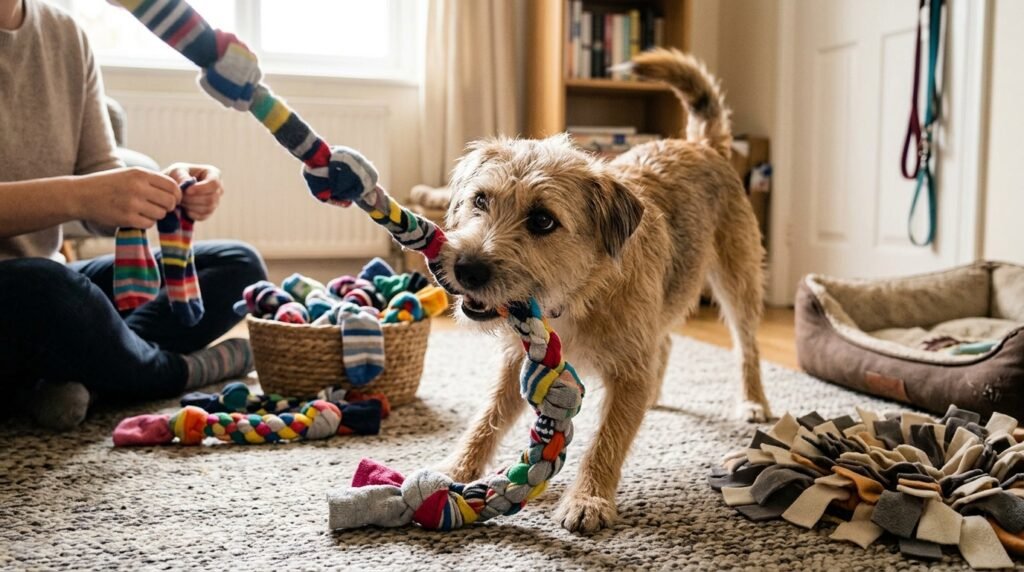
Dogs thrive on mental stimulation just as much as physical exercise. While daily walks remain essential, enrichment activities help prevent boredom, reduce stress, and encourage natural behaviors such as sniffing, searching, chewing, and problem-solving. Homemade sock toys provide an inexpensive way to introduce variety into your dog’s routine while strengthening your relationship through interactive play.
Different toy designs serve different purposes. A knotted sock encourages tug-of-war games that satisfy natural pulling instincts while providing healthy exercise. A treat-filled sock puzzle stimulates your dog’s brain by encouraging it to sniff, manipulate, and solve a simple challenge before earning a reward. Crinkle toys create exciting sounds that capture attention, while lightweight throwing toys transform ordinary games of fetch into energetic workouts.
Interactive play offers emotional benefits as well. Dogs often associate favorite toys with positive experiences shared with their owners. Spending just fifteen or twenty minutes each day playing together builds trust, reinforces training, and helps burn excess energy that might otherwise be directed toward chewing furniture or barking excessively.
Rotating homemade toys also keeps playtime exciting. Instead of leaving every toy available all the time, store a few away and reintroduce them later. This simple rotation makes familiar toys feel new again and helps maintain your dog’s interest. By combining different textures, sounds, and play styles, you create an enriching environment that supports both physical health and emotional well-being without spending a fortune.
Are Sock Dog Toys Safe?
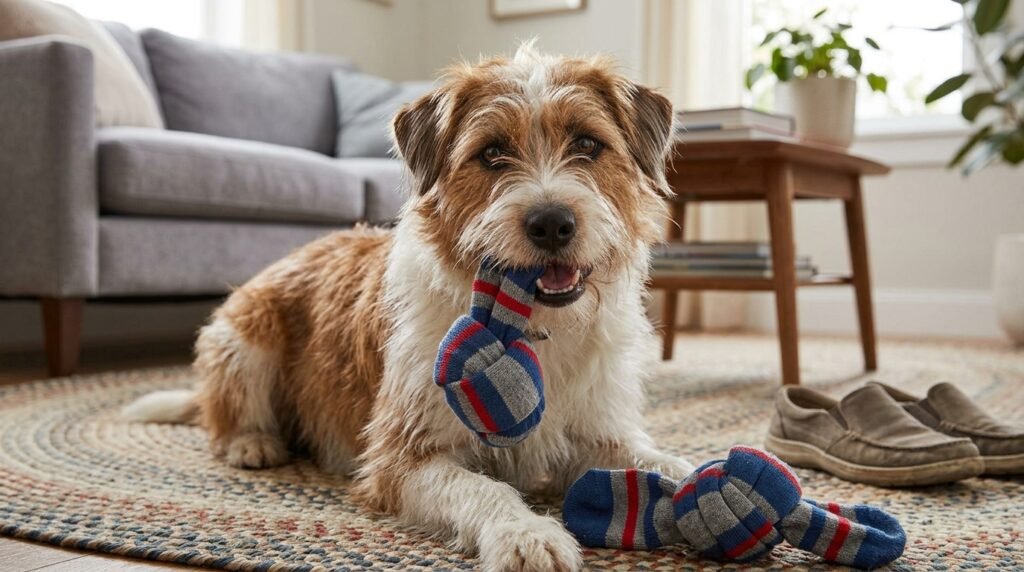
Safety should always come first whenever you make toys for your pet. Although old socks can become excellent enrichment tools, they are not suitable for every dog or every situation. Understanding your dog’s chewing habits is the first step toward deciding whether homemade sock toys are appropriate.
Gentle chewers who enjoy carrying, tugging, or fetching soft toys generally do well with properly constructed sock toys used under supervision. Dogs that aggressively tear fabric into small pieces, however, require extra caution. Swallowed fabric can create serious digestive blockages that may require emergency veterinary treatment. For this reason, homemade fabric toys should never be left with dogs that destroy toys unsupervised.
Before making a toy, inspect each sock carefully. Discard socks with holes, loose elastic, decorative buttons, sequins, metal parts, or plastic accessories that could become choking hazards. Wash the socks thoroughly using pet-safe detergent and avoid heavily scented fabric softeners that may irritate sensitive noses. Once the toy is finished, examine every knot and seam to ensure nothing can easily come loose during play.
Regular inspection remains essential throughout the toy’s life. Check for fraying fabric, stretched knots, or thinning material after every play session. If the toy begins falling apart, replace it immediately. Fortunately, because sock toys cost almost nothing to make, creating a fresh one is quick and easy. With careful supervision and routine inspection, homemade sock toys can provide safe, affordable entertainment for many dogs.
Safety Guidelines Every Owner Should Know
Even the simplest DIY dog toy deserves thoughtful preparation. Following a few basic safety practices dramatically reduces potential risks while ensuring your dog enjoys hours of fun. Start by matching the toy to your dog’s size and play style. A toy that is too small may become a choking hazard, while one that is excessively large may discourage play.
Choose strong cotton socks whenever possible because they resist tearing better than thin dress socks. Double-layering two socks can increase durability for medium-sized dogs that enjoy tugging games. Avoid stuffing toys with materials that break apart easily, and never include anything sharp, toxic, or small enough to be swallowed.
Supervised play is the golden rule for homemade toys. Stay nearby while your dog interacts with the toy, especially during the first few sessions. This allows you to observe how your dog plays and identify any weaknesses before they become dangerous. If your dog begins shredding fabric instead of playing appropriately, remove the toy and replace it with a more durable commercial chew toy designed for aggressive chewers.
Finally, remember that no homemade toy lasts forever. Regular replacement is part of responsible DIY pet ownership. Fortunately, with a drawer of old socks waiting to be repurposed, creating another safe and engaging toy is only a few minutes away.
When Homemade Toys Are Not Appropriate
Although DIY sock dog toys can be an affordable and enjoyable way to entertain your pet, they are not the right solution for every dog. Every canine has a unique personality, play style, and chewing strength. Understanding these differences is essential before introducing any homemade toy into your dog’s routine. While many dogs happily carry, fetch, or tug soft toys for months, others can destroy fabric in just a few minutes.
Aggressive chewers are the biggest concern. Breeds known for powerful jaws—or individual dogs that instinctively shred fabric—may quickly tear apart even thick cotton socks. If pieces of cloth are swallowed, they can create intestinal blockages that require immediate veterinary attention. For these dogs, heavy-duty rubber or nylon toys designed specifically for aggressive chewing are generally a safer choice. Homemade sock toys should only be used during closely supervised interactive play, if at all.
Puppies also deserve special consideration. Young dogs explore the world with their mouths and may not yet understand the difference between an approved toy and your favorite pair of socks. If you regularly give them old socks to play with, they could become confused and begin stealing clean laundry from hampers or closets. One way to reduce this risk is by transforming socks into toys that look noticeably different, such as adding a securely attached tennis ball, multiple knots, or colorful fleece strips.
Dogs recovering from surgery, suffering from dental problems, or experiencing gastrointestinal issues should avoid fabric toys unless specifically approved by a veterinarian. Always observe your dog’s behavior during play. If the toy begins unraveling or your dog attempts to eat pieces rather than simply play with it, remove it immediately and replace it with a safer alternative. Responsible supervision remains the most important factor in making homemade toys a positive experience.
Materials You’ll Need
One of the greatest advantages of making sock dog toys is that you probably already own most of the necessary supplies. Unlike many DIY projects that require specialized equipment or expensive materials, these toys can often be completed in less than fifteen minutes using common household items. Careful material selection, however, makes a significant difference in both safety and durability.
The most important component is, of course, the sock itself. Clean cotton athletic socks are usually the best choice because they are thicker and stronger than thin dress socks. Knee-high socks work especially well for tug toys since they provide extra length for tying secure knots and creating handles. Avoid socks with holes, loose elastic, decorative attachments, or worn-out fabric that tears easily.
Depending on the toy you plan to build, additional materials may include a clean tennis ball, empty plastic water bottle, fleece strips, rope, or healthy dog treats. If you choose to include a bottle for a crinkle toy, remove the cap, plastic ring, and label before use. These small pieces can become choking hazards if left attached. Soft fleece can also reinforce weak areas while adding texture that many dogs enjoy.
Basic household tools simplify the process. Sharp scissors help trim excess fabric neatly, while measuring tape ensures consistent lengths when making matching toys. A sewing needle and heavy thread can reinforce certain designs, although many popular sock toys require nothing more than a few tightly tied knots. Keeping supplies organized in a small container makes it easy to create replacement toys whenever needed.
Choosing the Right Socks
Not all socks are equally suitable for DIY dog toys. Selecting the right type greatly improves safety, durability, and overall enjoyment for your pet. Thick cotton sports socks remain the preferred option because they withstand pulling, twisting, and repeated washing much better than lightweight fashion socks.
Material matters. Cotton blends offer a comfortable texture while remaining relatively durable. Avoid delicate fabrics such as silk, lace, or very thin synthetic materials that tear quickly during play. Wool socks may be too warm and can shed fibers more easily, while compression socks often contain elastic materials that stretch excessively under tension.
Color and condition deserve attention as well. Bright colors make toys easier to locate in the yard or around the house, but ensure dyes are securely bonded and the socks have been washed thoroughly before use. Never use socks contaminated with oils, cleaning chemicals, or substances that may be harmful if licked.
The overall condition of the sock is perhaps the most important factor. Minor discoloration from normal wear is generally harmless after washing, but socks with large holes, loose seams, or fraying fabric should be discarded. Starting with strong, intact material significantly extends the toy’s lifespan while reducing the likelihood of dangerous tearing during active play.
Extra Supplies for Better Toys
While a simple knotted sock can provide plenty of entertainment, adding a few inexpensive materials can make homemade toys even more engaging. These enhancements introduce different textures, sounds, and challenges that encourage dogs to stay active both physically and mentally.
A tennis ball instantly transforms an ordinary sock into an exciting fetch toy. Simply place the ball inside the toe section and tie a secure knot beneath it. The sock becomes an easy-to-throw handle while the ball adds weight and bounce, making games of fetch more dynamic. Be sure to use a clean tennis ball intended for dogs whenever possible, as standard tennis balls may wear down with heavy chewing.
Fleece strips are another excellent addition. Braiding colorful fleece together with the sock creates stronger tug toys while introducing different textures that many dogs find appealing. Because fleece resists fraying better than many woven fabrics, it can increase durability without making the toy excessively rigid.
For dogs that enjoy puzzle games, healthy treats can be hidden inside layered socks tied with loose knots. This simple enrichment activity encourages sniffing and problem-solving while rewarding persistence. Just remember to supervise your dog closely and remove the toy after the treats have been found to prevent excessive chewing.
An empty plastic water bottle creates the familiar crinkling sound that many dogs love. Before inserting the bottle into the sock, remove the cap, safety ring, and label completely. The sock softens the hard plastic while allowing the crinkle noise to remain, producing an inexpensive toy that captures attention during supervised play sessions.
DIY Sock Dog Toy Ideas
Now comes the most enjoyable part of the project—transforming those old socks into exciting toys your dog will actually want to play with. The beauty of DIY toys lies in their flexibility. You can create several different designs using the same basic materials, allowing you to rotate toys regularly and keep your dog’s interest high.
Some toys encourage energetic games of fetch, while others promote tugging, sniffing, or problem-solving. Rotating these different styles prevents boredom and provides a richer play experience than relying on a single favorite toy. Better still, replacing worn toys takes only a few minutes because the materials are inexpensive and readily available.
As you build each toy, remember that safety remains more important than appearance. Strong knots, durable materials, and careful supervision ensure your homemade creations remain enjoyable without introducing unnecessary risks. Testing each finished toy yourself before offering it to your dog helps identify weak points that may need reinforcement.
The following sections introduce several easy projects suitable for most households, beginning with one of the simplest and most popular options: the classic knotted tug toy.
Knotted Tug Toy
A knotted tug toy is often the easiest homemade project to create, making it an excellent starting point for beginners. Simply lay a long cotton sock flat, roll it tightly from toe to opening, and tie a firm knot near each end. For extra durability, place one sock inside another before rolling them together. This double-layer design withstands pulling better while providing a thicker grip for both you and your dog.
The finished toy works perfectly for supervised games of tug-of-war. Tugging provides excellent physical exercise while strengthening the bond between owner and pet. It can also become a valuable training tool by teaching commands such as “drop it,” “leave it,” and “take it.” These games combine fun with valuable impulse-control practice when played using positive reinforcement.
Always allow your dog to win occasionally during tug games to maintain confidence and enthusiasm. Avoid jerking the toy violently or lifting your dog off the ground, particularly with puppies whose teeth and joints are still developing. Replace the toy immediately if knots begin loosening or the fabric starts tearing.
Tennis Ball Throw Toy
If your dog becomes excited the moment you pick up a tennis ball, this DIY project is likely to become an instant favorite. A sock tennis ball toy combines the familiar bounce of a tennis ball with the flexibility of a fabric handle, making it easier to throw farther while adding a new texture that keeps playtime interesting. It’s a simple upgrade that requires only a clean sock, a dog-safe tennis ball, and a sturdy knot.
Begin by placing the tennis ball inside the toe section of a long athletic sock. Pull the fabric tightly around the ball and tie a secure knot directly beneath it. The remaining length of the sock acts as a comfortable handle, allowing you to swing and launch the ball with minimal effort. If you want extra durability, insert the first sock into a second one before adding the ball. The double layer helps resist wear during repeated games of fetch.
This toy works well in backyards, parks, or open indoor spaces where your dog has room to run safely. The fabric tail creates unpredictable movement while flying through the air, making the toy more visually stimulating than a standard tennis ball. Many dogs find this wobbling motion irresistible because it resembles the erratic movement of prey, naturally encouraging chasing and retrieving instincts.
Remember that this toy is designed primarily for interactive fetch, not prolonged chewing. After each play session, inspect the knot and surrounding fabric for signs of stretching or tearing. If the material begins to weaken or the tennis ball becomes exposed, retire the toy and make a new one. Since the materials are inexpensive and readily available, replacing worn toys is both quick and economical.
Crinkle Bottle Toy
Many dogs are fascinated by the crisp crackling sound produced by a plastic bottle. A homemade crinkle sock toy combines that satisfying noise with the softness of fabric, creating an engaging toy that stimulates multiple senses at once. It’s especially useful for curious dogs that enjoy carrying toys around the house while exploring new sounds and textures.
To make this toy, thoroughly clean and dry an empty plastic water bottle. Remove the bottle cap, plastic safety ring, and label completely, as these small pieces can present choking hazards. Slide the bottle into a thick cotton sock, gathering any extra fabric at the opening before tying a secure knot. The sock muffles sharp edges while allowing the bottle’s crinkling sound to remain clearly audible during play.
Dogs often enjoy squeezing, tossing, and carrying these toys because every bite produces a rewarding sound. The crackling encourages interaction and can help keep energetic dogs occupied during short supervised play sessions. Some owners even rotate bottles of different sizes inside the same sock to provide subtle variations in texture and sound, keeping the toy fresh and exciting.
Because plastic bottles eventually weaken with repeated compression, inspect the toy after every use. Replace the bottle if it develops cracks, sharp edges, or punctures. The fabric covering should also be checked for excessive wear, especially around the knot where stress tends to accumulate. With regular maintenance and supervision, this simple project offers an inexpensive way to provide sensory enrichment for many playful dogs.
Treat Puzzle Sock
Mental stimulation is just as important as physical exercise, and a treat puzzle sock offers an easy way to challenge your dog’s problem-solving abilities. Unlike toys designed purely for fetching or tugging, this activity encourages sniffing, searching, and persistence—behaviors that closely resemble how dogs naturally forage for food.
Start with a clean cotton sock and place several healthy training treats inside. Tie a loose knot near the opening or tuck the fabric into itself so your dog must work to access the rewards. For a slightly greater challenge, place the first sock inside a second one before tying another loose knot. Adjust the difficulty according to your dog’s experience and confidence, ensuring the puzzle remains fun rather than frustrating.
Puzzle toys help slow fast eaters while providing valuable mental exercise. Dogs use their noses, paws, and mouths together as they experiment with different ways to uncover the hidden treats. This type of enrichment can be particularly beneficial during rainy days, cold weather, or times when long outdoor walks are not possible. Even ten or fifteen minutes of focused problem-solving can leave a dog pleasantly tired and satisfied.
Always supervise puzzle sessions closely and remove the toy once the treats have been found. The goal is to encourage investigation rather than extended fabric chewing. Changing the location, number of treats, or knot style each time keeps the activity engaging while preventing your dog from memorizing a single solution.
Cleaning and Maintaining Homemade Toys
Homemade dog toys require regular care to remain safe and hygienic. Dogs carry toys through the yard, across floors, onto furniture, and occasionally into muddy puddles. Dirt, saliva, and bacteria naturally build up over time, making routine cleaning an important part of responsible pet ownership. Fortunately, most sock toys are easy to wash and dry, allowing them to remain fresh with very little effort.
After every play session, perform a quick visual inspection. Look for loose threads, thinning fabric, stretched knots, or exposed stuffing if your design includes additional materials. Catching small problems early prevents more serious damage later. Since homemade toys are inexpensive to replace, there’s little reason to continue using one that shows significant wear.
Most cotton sock toys can be machine washed inside a mesh laundry bag using a gentle cycle and fragrance-free detergent. Air drying is generally the safest option because high dryer temperatures may weaken elastic fibers over time. If the toy contains removable components such as tennis balls or plastic bottles, separate them before washing and inspect each item individually before reassembly.
Maintaining several toys in rotation offers additional benefits. While one toy is being cleaned, another can take its place, ensuring your dog always has something interesting to play with. Rotating toys also helps maintain novelty, making familiar favorites feel exciting again after a short break.
Inspecting for Wear
Routine inspections are one of the simplest ways to keep DIY toys safe. Even sturdy cotton socks gradually weaken after repeated tugging, chewing, and washing. Spending a minute or two checking each toy before and after play can prevent accidents and extend its useful life.
Pay particular attention to knots because they experience the greatest amount of tension during tug games. If a knot begins slipping or loosening, retie it immediately or replace the toy altogether. Examine the surrounding fabric for thinning areas where holes may soon develop. Double-layered socks often wear unevenly, so inspect both the outer and inner layers carefully.
Dogs that chew vigorously may leave small puncture marks around the toe or heel sections. Although these openings may appear harmless at first, they can expand rapidly during active play. Replace toys at the first sign of significant tearing rather than waiting for complete failure.
Watching your dog’s behavior also provides useful clues. If your pet suddenly begins shredding a toy that it previously carried gently, the fabric may have weakened enough to encourage destructive chewing. Replacing worn toys promptly keeps play sessions enjoyable while reducing unnecessary risks.
Washing and Storage
Proper storage helps homemade toys last longer while keeping them clean between play sessions. After washing and thoroughly drying each toy, place it in a dedicated basket or storage bin away from direct sunlight and moisture. This simple habit prevents mildew, unpleasant odors, and unnecessary fabric deterioration.
Separating indoor toys from outdoor toys is another helpful practice. Toys used outside naturally collect dirt, grass, and bacteria that you may not want transferred onto carpets or furniture. Keeping two small collections allows you to maintain better hygiene while extending the lifespan of each toy.
Labeling a storage container also helps children understand which socks are designated for pets and which belong in the laundry. This prevents accidental mix-ups and reinforces good household organization. Every few weeks, sort through the toy collection and discard any items showing excessive wear. Since homemade replacements are so easy to make, maintaining a fresh supply requires only a handful of old socks and a few minutes of your time.
With consistent cleaning, careful inspection, and proper storage, your DIY sock toys can continue providing safe, affordable entertainment while reducing household waste and enriching your dog’s everyday life.
DIY vs. Store-Bought Dog Toys
Choosing between homemade and commercial dog toys doesn’t have to be an all-or-nothing decision. Many pet owners find that a combination of both works best. DIY sock dog toys are ideal for interactive games like tug, fetch, and scent puzzles, while professionally manufactured toys often provide greater durability for dogs with powerful chewing habits. Understanding the strengths of each option helps you create a balanced toy collection that keeps your dog entertained while staying within your budget.
One of the biggest advantages of homemade toys is customization. You can adjust the size, shape, and difficulty level to suit your dog’s breed, age, and personality. A puppy may enjoy a lightweight knotted sock, while a larger dog may prefer a reinforced double-sock tug toy. You can also replace worn toys in just a few minutes without making another trip to the pet store.
Store-bought toys, on the other hand, are often manufactured from specialized materials such as natural rubber, reinforced nylon, or heavy-duty fabrics designed to withstand intense chewing. Many also undergo durability testing and are intended for specific purposes, such as dental cleaning, treat dispensing, or prolonged chewing sessions. Although they generally cost more, they may offer better long-term value for dogs that quickly destroy fabric toys.
The ideal approach is to use each type where it performs best. Homemade toys provide affordable enrichment and encourage creativity, while commercial products fill the gap for activities requiring exceptional durability. Rotating both homemade and store-bought toys keeps your dog’s environment stimulating and reduces boredom.
DIY vs. Store-Bought Comparison
| Feature | DIY Sock Dog Toys | Store-Bought Dog Toys |
|---|---|---|
| Cost | Very Low | Moderate to High |
| Customization | Excellent | Limited |
| Eco-Friendly | High | Varies by Brand |
| Durability | Moderate | Usually Higher |
| Easy to Replace | Yes | Depends on Availability |
| Suitable for Heavy Chewers | Usually No | Many Specialized Options |
| Interactive Bonding | Excellent | Good |
Expert Tips for Longer-Lasting Homemade Toys
Making a homemade toy is only the beginning. A few smart habits can significantly increase its lifespan while improving your dog’s safety and enjoyment. Professional trainers and experienced pet owners often emphasize that how a toy is used matters just as much as how it is built.
Begin with the strongest materials available. Thick cotton athletic socks generally outlast thin dress socks because they resist stretching and tearing more effectively. If your dog enjoys energetic tug games, placing one sock inside another before tying the knots creates a noticeably stronger toy. Reinforcing stress points with a few stitches of heavy-duty thread can also improve durability without changing the toy’s appearance.
Toy rotation is another highly effective strategy. Instead of leaving every toy available at all times, divide them into small groups and rotate them every few days. This simple technique keeps familiar toys feeling new while reducing overall wear. Dogs often become excited when an old favorite suddenly reappears after a short break.
Matching toys to specific activities also helps extend their useful life. Reserve knotted sock toys for supervised tug games, tennis ball socks for fetch, and treat puzzles for enrichment sessions. Avoid allowing dogs to spend hours chewing fabric toys unattended, as prolonged chewing accelerates damage and increases the risk of swallowing loose fibers.
Finally, inspect every toy before and after play. A loose knot, thinning fabric, or small tear may seem insignificant, but addressing these issues immediately prevents more serious problems. Because homemade sock toys require very little time or money to replace, it’s always better to create a fresh one than continue using a damaged toy.
Conclusion
Turning old socks into dog toys is one of the simplest and most rewarding DIY pet projects you can undertake. What begins as a single forgotten sock can quickly become a favorite fetch toy, tug rope, crinkle toy, or treat puzzle that keeps your dog physically active and mentally engaged. Beyond saving money, these projects support a more sustainable lifestyle by giving everyday household items a valuable second purpose instead of sending them to the landfill.
The key to success is balancing creativity with safety. Choosing clean, durable materials, supervising play sessions, inspecting toys regularly, and replacing them when they show signs of wear all contribute to a positive experience. Homemade toys are most effective when they complement—not replace—appropriate commercial toys for heavy chewers or specialized training needs.
Building toys yourself also strengthens the bond between you and your dog. Every game of tug, every exciting game of fetch, and every puzzle solved together creates moments of trust, learning, and shared enjoyment. These interactions are often far more meaningful than the toy itself.
Whether you’re looking to reduce household waste, stretch your pet budget, or simply enjoy a creative afternoon project, transforming old socks into engaging dog toys is a practical idea that benefits both you and your furry companion. With just a little imagination and a drawer full of unmatched socks, you can create hours of safe, affordable entertainment while making your dog’s daily routine more exciting.
Frequently Asked Questions
1. Can every dog safely play with sock toys?
No. Sock toys are best suited for gentle to moderate chewers and should always be used under supervision. Dogs that aggressively shred or swallow fabric should use toys specifically designed for heavy chewing.
2. What type of socks work best for homemade dog toys?
Clean, thick cotton athletic socks or crew socks are generally the best choice because they are durable, comfortable to handle, and less likely to tear than lightweight dress socks.
3. How often should I replace a DIY sock toy?
Inspect the toy after every play session. Replace it immediately if you notice holes, loose threads, weakened knots, or any damage that could allow your dog to swallow pieces of fabric.
4. Can I wash homemade sock dog toys?
Yes. Most cotton sock toys can be machine washed with a mild, pet-safe detergent. Allow them to air dry completely before giving them back to your dog.
5. What are the easiest DIY sock toys for beginners?
A simple knotted tug toy, a tennis ball sock throw toy, and a treat puzzle sock are among the easiest projects. They require very few materials and can usually be completed in less than fifteen minutes.