
Introduction
Teaching your dog key commands is vital for good behavior, safety, and strengthening the bond between you and your furry friend. This article will explore essential commands every dog should learn, including their importance, tips for training, and the benefits that come with them. Mastering these basics lays the foundation for a well-behaved and happy dog.
1. Sit
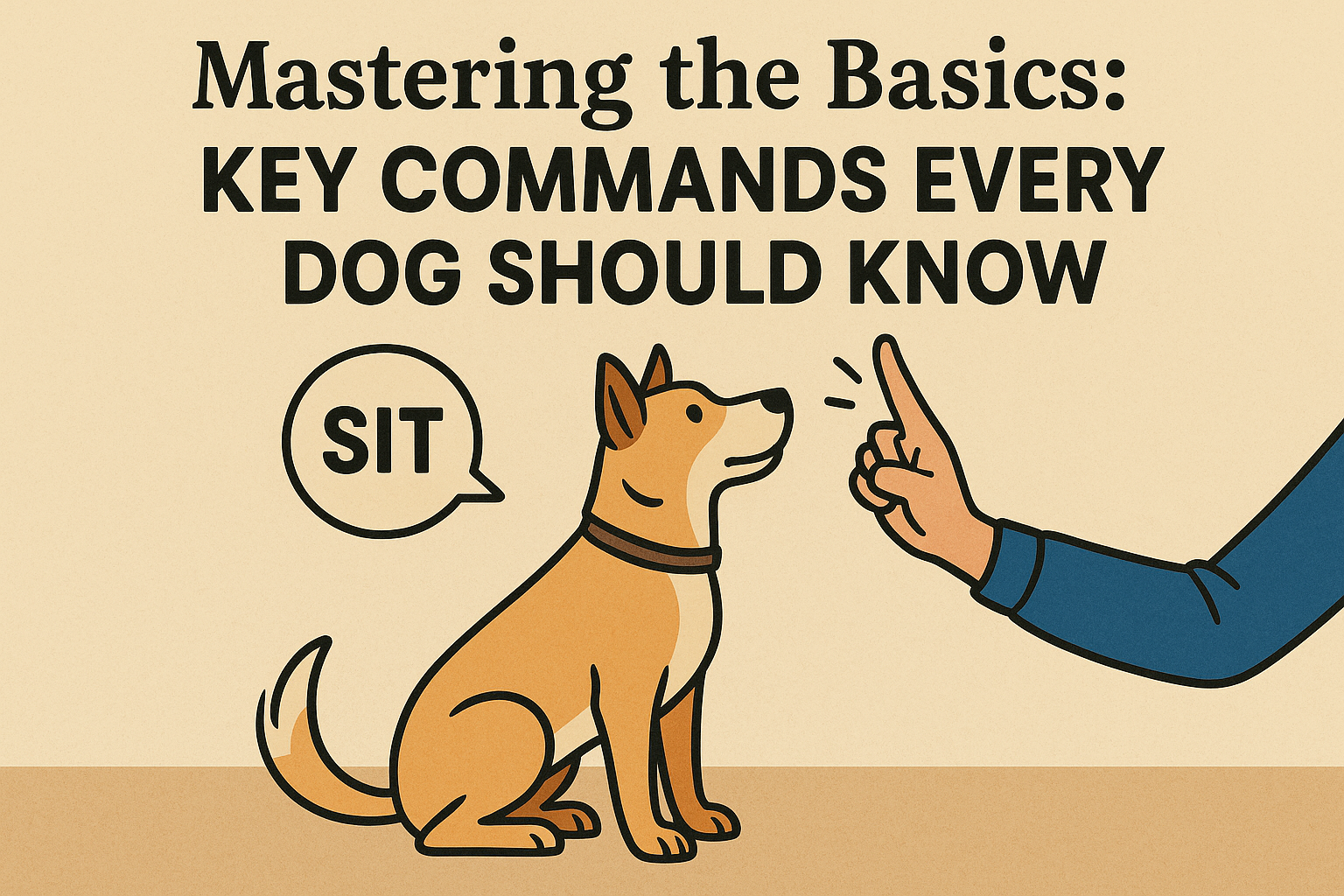
The “sit” command is one of the first and most fundamental commands to teach your dog. It serves as an excellent starting point for training because it’s easy for dogs to learn and can help manage them during various situations.
Importance of “Sit”
The “sit” command is crucial for maintaining control in numerous situations, such as during greetings, meal times, or when waiting for a walk. It also helps in reducing jumping and other unwanted behaviors.
How to Train “Sit”
- Start with your dog standing in front of you.
- Hold a treat close to their nose, then slowly move your hand upwards. As their head follows the treat, their bottom will lower.
- Once they sit, say “Sit,” and give them the treat along with praise.
- Repeat this process until your dog associates the command with the action.
2. Stay
The “stay” command can prevent dangerous situations, such as your dog running into traffic or jumping on guests. It helps in creating a disciplined dog who can be trusted to remain in place.Importance of “Stay”
How to Train “Stay”
3. Come
The “come” command is critical for keeping your dog safe in off-leash situations. It’s a command that every dog should know to avoid potential dangers.
Importance of “Come”
The “come” command can save your dog’s life. It’s useful in situations where you need your dog to return immediately, such as when nearing a road or when there are other dangers present.
How to Train “Come”
- Start indoors or in a secured area with minimal distractions.
- Use a leash or long line to control their movement.
- Squat down and call your dog using a cheerful voice, saying “Come.”
- When your dog reaches you, praise them and give them a treat.
- Gradually practice in more distracting environments.
4. Down
The “down” command teaches your dog to lie down on command. This command helps in controlling your dog, especially in social situations.
Importance of “Down”
The “down” command is useful for managing your dog’s impulses and energy levels, providing them with a calming behavior during hectic situations.
How to Train “Down”
- Begin with your dog in a sitting position.
- Hold a treat in front of their nose and move it towards the ground. Their nose should follow the treat.
- As they lower their body, say “Down” and reward them when they lie down.
5. Leave It
This command prevents your dog from picking up harmful items or engaging with other distractions, ensuring that they stay safe and focused on you during walks or outside adventures.Importance of “Leave It”
How to Train “Leave It”
6. Heel
The “heel” command teaches your dog to walk beside you without pulling on the leash. It’s important for pleasant walks and good leash manners.
Importance of “Heel”
This command ensures that your walks are enjoyable and manageable. It allows you to maintain control over your dog while walking, reducing distractions and promoting safety.
How to Train “Heel”
- Start with your dog sitting by your side.
- Hold a treat at your side and take a step forward, encouraging your dog to walk with you.
- If they stay by your side, reward them. If they pull, stop walking until they return to your side.
7. Off
The “off” command helps to establish boundaries, informing your dog when it’s inappropriate to jump on people or furniture.
Importance of “Off”
Teaching your dog when to refrain from jumping improves manners and interactions with guests, enhancing both your dog’s social skills and your own peace of mind.
How to Train “Off”
- When your dog jumps up, calmly say “Off” and turn away from them.
- Wait for them to return to the ground, and then reward them only when they are calm.
8. Wait
This command is beneficial for safety, ensuring your dog doesn’t rush out doors or jump out of vehicles before you signal them.Importance of “Wait”
How to Train “Wait”
Conclusion
Mastering these basic commands provides the foundation for a well-behaved dog, ensuring safety and effective communication. Consistency, patience, and positive reinforcement are key to successful training. As your dog masters these commands, you’ll notice a stronger bond between you and a more confident, obedient dog. As you move beyond these basics, you’ll be able to teach more advanced commands and tricks, enriching your dog’s life and enhancing your relationship.
FAQs
Q: How long does it take for a dog to learn these commands?
A: Each dog is different, but with consistent practice, most dogs can learn basic commands within a few days to a few weeks.
Q: What should I do if my dog doesn’t respond to a command?
A: Stay calm and patient. Try using a higher value treat, minimizing distractions, and ensure you are consistent in your training approach.
Q: Can I use negative reinforcement during training?
A: Positive reinforcement is much more effective and creates a stronger bond between you and your dog. Avoid negative reinforcement as it can lead to fear and anxiety.
Q: How often should I practice these commands?
A: Short, frequent training sessions (5-10 minutes) about 2-3 times a day are ideal to keep the dog’s attention and reinforce learning.
Q: Is it okay to train my dog at home?
A: Yes! Training at home can be very effective. Just ensure a calm environment and gradually introduce distractions as your dog progresses.