
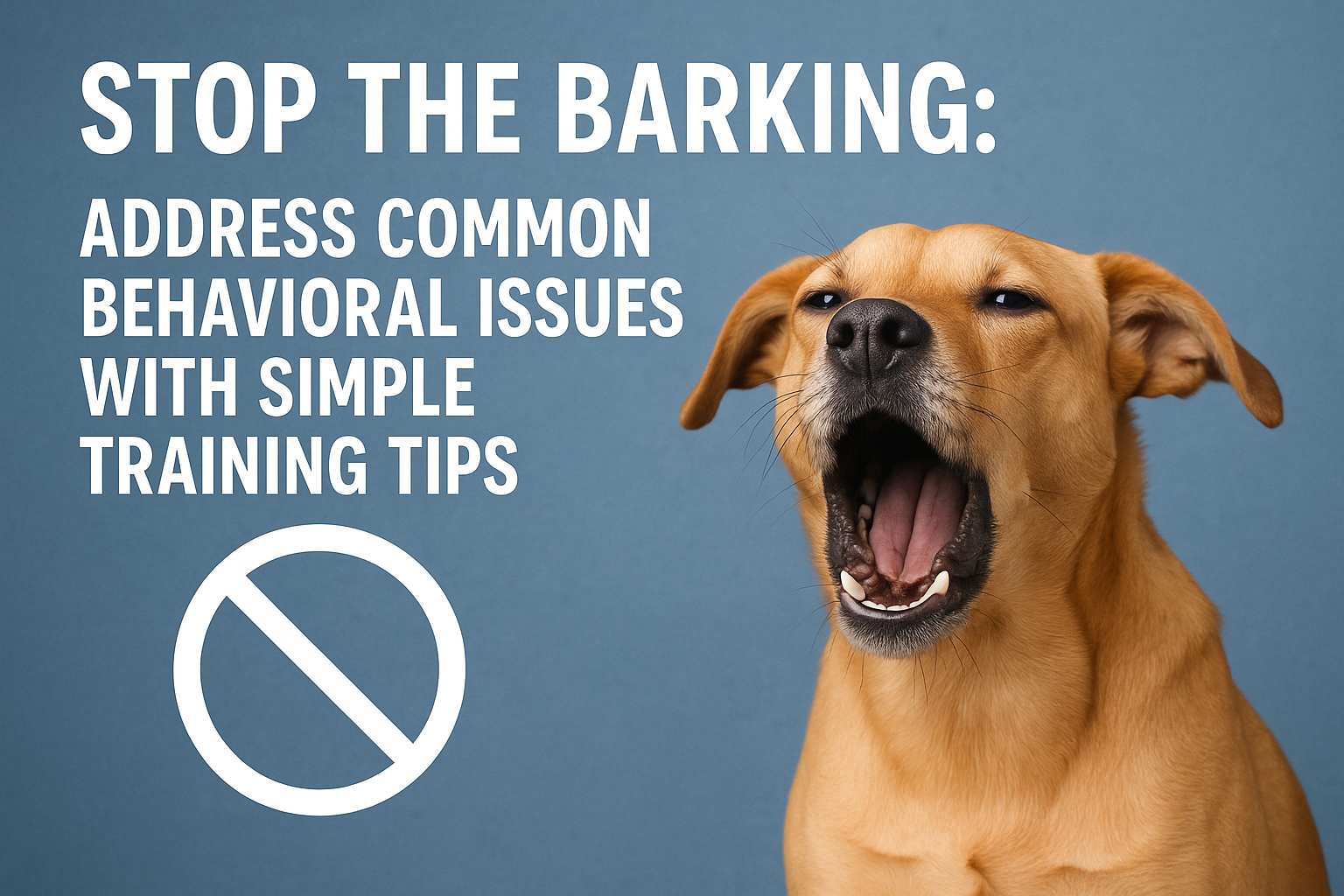
Barking is one of the most common forms of communication among dogs. However, excessive barking can lead to problems for dog owners, neighbors, and the dog itself. Fortunately, addressing barking and other behavioral issues can often be accomplished through simple training techniques and understanding the reasons behind such behaviors.
Understanding Why Dogs Bark
Before we can effectively train our dogs to reduce excessive barking, it is important to understand the reasons behind it. Dogs may bark due to:
-
- Alerting: Dogs often bark to alert their owners about potential intruders or unusual noises.
-
- Attention-Seeking: Dogs may bark when they want attention or to play.
-
- Fear or Anxiety: Barking can be a response to fear, separation anxiety, or stress.
-
- Excitement: Many dogs bark when they are excited, such as during playtime or greetings.
-
- Boredom: A bored dog may bark to entertain itself or get the owner’s attention.
Training Tips to Curb Excessive Barking
1. Identify the Trigger
The first step in addressing excessive barking is to identify what triggers it. Spend time observing your dog to see when they bark. Once you know the triggers, you can work on addressing them specifically.
2. Use Positive Reinforcement
Positive reinforcement involves rewarding your dog for good behavior. For example, if your dog starts barking at a passerby, wait for them to stop barking before giving them a treat or praise. This teaches them that quiet behavior is rewarded.
3. Implement Consistent Commands
Establish clear commands like “quiet” or “enough.” Consistently use these commands when your dog barks. When your dog responds correctly, praise them and offer a treat.
4. Teach Alternate Behaviors
Instead of only trying to stop barking, teach your dog an alternative behavior. For instance, if your dog barks at visitors, teach them to go to a designated spot, like a bed or mat, and stay there until they receive a cue that they can come back.
5. Socialization
Proper socialization helps reduce fear and anxiety, which can lead to barking. Expose your dog to different environments, people, and other dogs gradually, so they learn to become more comfortable in various situations.
6. Provide Regular Exercise and Mental Stimulation
A well-exercised dog is less likely to bark out of boredom. Regular walks, playtime, and mental activities like puzzle toys can all help keep your dog more satisfied.
7. Manage the Environment
If certain stimuli are causing your dog to bark (like passing cars or other animals), manage their environment. Close the blinds, make use of white noise machines, or create a safe space for them to retreat to when they get overwhelmed.
Additional Behavioral Issues
Excessive barking is just one of many behavioral issues. Here are a few others and tips on how to manage them:
1. Jumping on People
Jumping is often a sign of excitement. Teach your dog to sit and reward calm behavior instead of allowing them to jump to greet people. This redirects their enthusiasm into a more appropriate behavior.
2. Chewing
Destructive chewing can stem from boredom, anxiety, or teething. Provide appropriate chew toys and adequate physical and mental exercise. Spaying or neutering may also help if the behavior is hormone-driven.
3. Digging
Digging can indicate that your dog is seeking attention or trying to escape. Providing a specific digging area or increasing playtime outside can help direct this behavior more productively.
4. Aggressive Behaviors
Aggression can be dangerous and may require professional help. Consult a dog trainer or behaviorist if your dog exhibits aggressive tendencies towards people or other animals.
Conclusion
Understanding and addressing barking and other common behavioral issues in dogs requires patience and consistency. By employing positive reinforcement training and identifying triggers for barking, dog owners can create a more harmonious living environment for themselves and their pets. Each dog is unique, so be prepared to adapt your training methods to suit their individual needs.
Frequently Asked Questions (FAQs)
1. How long will it take to stop my dog’s barking?
The timeline varies for each dog. Some may respond quickly to training, while others require more time and patience. Consistency is key.
2. Are there any products that can help with barking?
There are anti-bark collars and devices, but they should be used with caution and ideally under professional guidance. Training techniques are often more effective and humane.
3. Can I train my dog to bark on command?
Yes, you can train your dog to bark on command with the right approach, using rewards when they bark when asked, reinforcing that behavior without encouraging excessive barking.
4. When should I consider seeking professional help?
If your dog’s barking is accompanied by aggressive behavior or if it significantly disrupts your life or your neighbors’ peace, seeking professional help from a certified dog trainer or behaviorist may be necessary.
5. Is excessive barking a sign of a deeper problem?
Excessive barking can sometimes indicate anxiety, insecurity, or even boredom. Understanding your dog’s underlying feelings is crucial to managing their behavior effectively.