
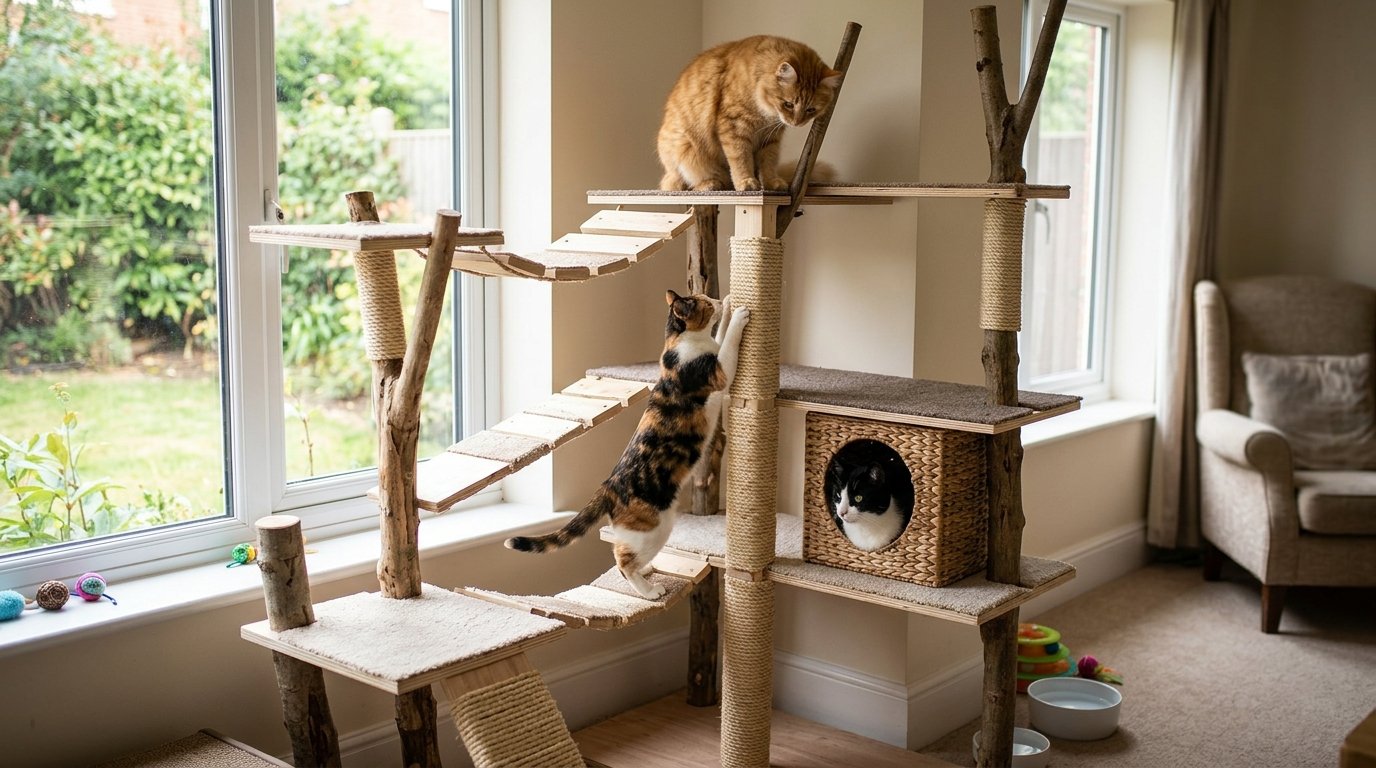
Why Every Indoor Cat Needs Vertical Space
Imagine your cat gazing longingly at the top of a bookshelf or carefully balancing on the back of the couch just to get a better view of the room. That behavior isn’t random—it’s instinct. Cats are natural climbers, hunters, and observers. In the wild, they seek elevated locations to monitor their surroundings, avoid danger, and rest in peace. Even indoor cats retain these deeply rooted instincts, which is why providing vertical space can dramatically improve their quality of life.
A cat jungle gym transforms an ordinary room into an exciting adventure zone. Instead of spending hours sleeping on the floor or scratching your furniture out of boredom, your feline companion gains an environment that encourages movement, exploration, and play. Recent DIY pet experts continue to recommend wall-mounted climbing systems because they maximize living space while enriching a cat’s environment. Securely mounting shelves into wall studs, using durable materials, and creating multiple climbing routes are considered today’s best practices for safe, long-lasting installations.
For pet owners, a jungle gym offers benefits beyond keeping a cat entertained. Active cats tend to maintain healthier body weights, experience reduced stress, and display fewer destructive behaviors. The investment often pays for itself by protecting furniture, curtains, and carpets from unwanted scratching or climbing. Whether you live in a compact apartment or a spacious home, building a custom jungle gym allows you to tailor every platform, bridge, and perch to your cat’s personality and your available space.
Another reason these climbing systems have become increasingly popular is their flexibility. You don’t need an entire room dedicated to your pet. A single empty wall can become an engaging playground filled with shelves, ramps, hammocks, scratching posts, and lookout stations. Modern designs also blend beautifully with home décor, making the structure look more like stylish furniture than pet equipment. With thoughtful planning and safe construction, you’ll create a feature that both you and your cat can enjoy for years.
Natural Climbing Instincts
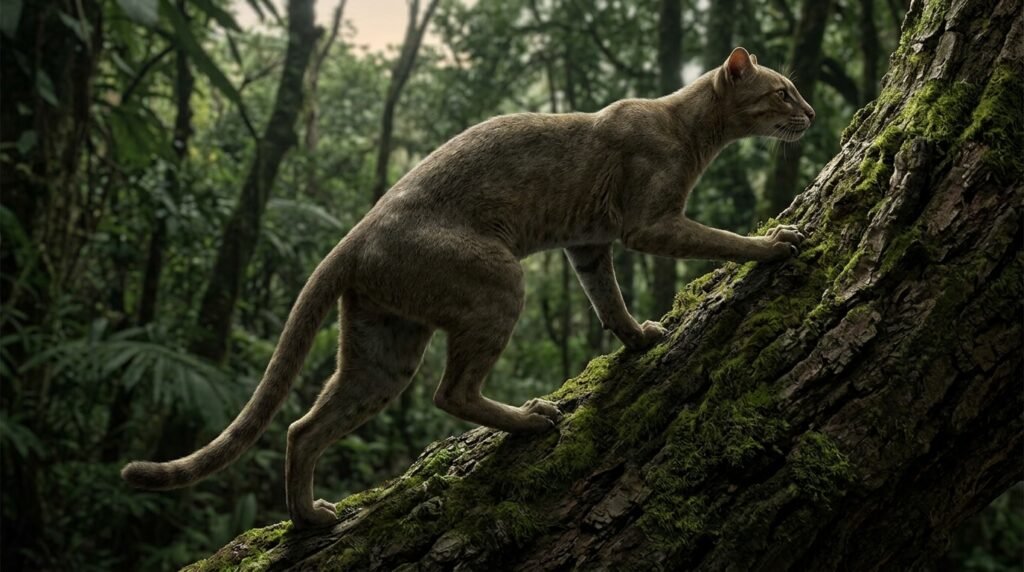
Cats have spent thousands of years evolving into agile climbers. Their flexible spines, powerful hind legs, sharp claws, and remarkable balance make vertical movement feel effortless. Even kittens instinctively climb as they explore their surroundings. Providing opportunities to express this natural behavior is one of the simplest ways to enrich an indoor cat’s daily life.
When a cat climbs to a high perch, it isn’t simply seeking a better view. Elevated spaces provide a sense of security. From above, cats can observe family activities, monitor other pets, and retreat from stressful situations without leaving the room. In homes with children or multiple animals, high resting spots become safe havens where cats can relax without interruption. This can significantly reduce anxiety and territorial conflicts.
Climbing also satisfies a cat’s curiosity. Every shelf becomes a destination, every bridge an adventure, and every platform an opportunity to explore from a different angle. This constant environmental stimulation helps prevent boredom, which is one of the leading causes of unwanted behaviors such as excessive scratching, nighttime zoomies, or attention-seeking mischief. Rather than discouraging climbing, a jungle gym channels that instinct into a safe, designated area.
The physical benefits are equally impressive. Jumping between platforms strengthens muscles, improves flexibility, enhances coordination, and supports joint health. Regular climbing sessions function as natural exercise without requiring owners to actively supervise every moment. Older cats can also benefit when platforms are spaced appropriately with ramps or gradual steps, allowing them to remain active while reducing strain on aging joints.
Physical and Mental Benefits
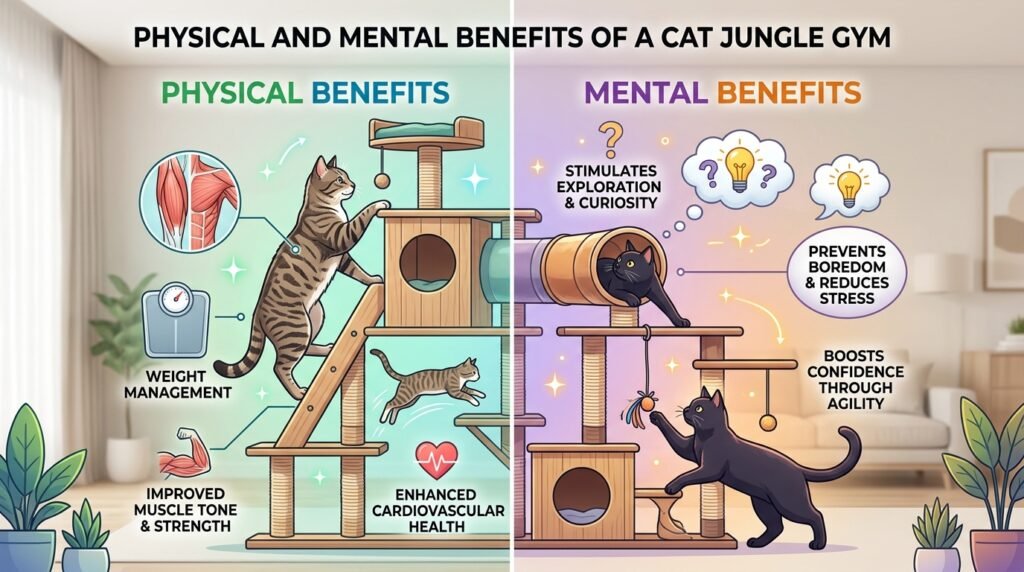
A thoughtfully designed cat jungle gym offers much more than entertainment—it contributes directly to your cat’s overall health. Indoor cats often lead relatively sedentary lives compared to their outdoor counterparts. Limited opportunities for exploration and exercise can lead to weight gain, muscle loss, and boredom. By encouraging climbing, stretching, jumping, and balancing, a jungle gym transforms everyday movement into an enjoyable workout.
Exercise helps maintain a healthy body condition while reducing the risk of obesity-related health concerns. Climbing from one level to another engages multiple muscle groups, improves cardiovascular fitness, and increases flexibility. Unlike repetitive play sessions that may last only a few minutes, cats naturally return to their climbing structures throughout the day, accumulating valuable physical activity without even realizing they’re exercising.
Mental stimulation is just as important. Cats are intelligent problem-solvers that thrive on novelty and exploration. A multi-level jungle gym encourages them to make decisions, choose different routes, and investigate new resting places. Rotating toys, hiding treats, or adding interactive elements keeps the environment fresh and engaging. This kind of enrichment reduces boredom and helps prevent stress-related behaviors such as overgrooming, excessive vocalization, or scratching household furniture.
The emotional benefits extend to the entire household. A well-exercised and mentally stimulated cat is generally calmer, more confident, and easier to live with. Multi-cat homes especially benefit from vertical territory because each cat can establish preferred resting areas without competing for the same floor space. By increasing usable living area vertically, a jungle gym supports harmony while giving every cat opportunities to climb, play, and relax comfortably.
Planning Your Cat Jungle Gym
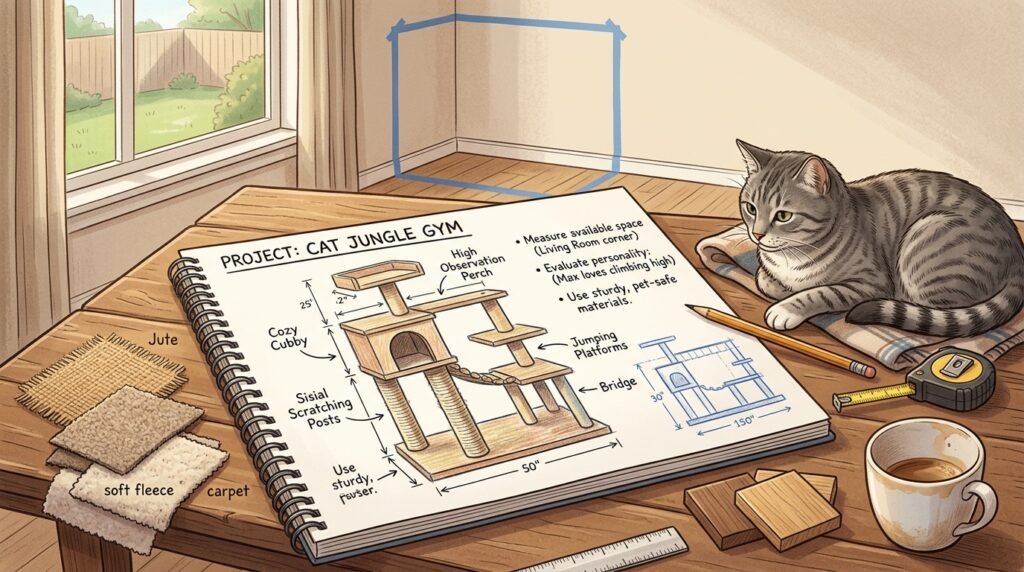
Building a successful cat jungle gym begins with careful planning rather than immediately picking up tools. Taking time to evaluate your available space, your cat’s personality, and your home’s layout ensures the finished project will be safe, functional, and enjoyable. Every cat is different. Some love daring leaps between platforms, while others prefer gradual ramps and cozy resting spots. Designing around your pet’s habits leads to a structure they’ll actually use every day.
Start by selecting an appropriate wall or corner of your home. Living rooms, home offices, and quiet hallways often work well because they allow cats to observe household activity without being constantly disturbed. Avoid placing climbing structures near fragile decorations, televisions, or doors that open frequently. Consider nearby windows as well. Cats naturally enjoy watching birds, squirrels, and outdoor activity, making a window-adjacent perch one of the most popular destinations on any jungle gym.
Next, measure the available wall space carefully. Think vertically rather than horizontally. Even a narrow wall can accommodate multiple shelves arranged in a staircase pattern leading to elevated resting platforms. Planning different routes adds excitement and allows several cats to move independently throughout the structure. Incorporating bridges, hammocks, tunnels, and scratching posts creates a complete playground instead of simply stacking shelves on a wall.
Safety should remain the highest priority throughout the planning process. Every shelf must be securely fastened into structural wall studs using heavy-duty hardware capable of supporting your cat’s weight with a generous safety margin. Choose smooth, rounded edges to reduce injury risk and apply non-slip carpeting, cork, or sisal covering to climbing surfaces for better traction. Before allowing your cat to explore the completed jungle gym, inspect every connection carefully, test each platform for stability, and ensure there are no sharp screws or loose components. Investing extra time during planning results in a durable climbing system that provides years of safe exploration and enrichment.
Materials You’ll Need
Choosing the right materials is the foundation of a safe, durable, and attractive cat jungle gym. While it may be tempting to use leftover wood or inexpensive hardware, investing in quality supplies ensures your climbing structure remains secure for years of daily use. Cats jump with surprising force, especially when launching from high platforms, so every component should be capable of supporting significantly more than your cat’s weight. Durability is just as important as appearance because the structure will experience constant climbing, scratching, and playful impacts.
Plywood is one of the most popular materials for platforms due to its strength and resistance to warping. A thickness of at least ¾ inch (18–20 mm) provides excellent support for most cats. Solid pine is another reliable option, especially for decorative shelves and support brackets. Whichever material you choose, ensure all surfaces are smooth and free from splinters. Sand every edge carefully and use non-toxic, pet-safe finishes if you plan to stain or paint the wood.
The hardware deserves equal attention. Heavy-duty wall anchors should only be used when wall studs are unavailable, but whenever possible, mount shelves directly into studs using sturdy lag screws or structural wood screws. Metal shelf brackets provide excellent support for larger platforms, while floating shelf systems create a modern appearance when properly installed. Double-check every fastener after installation, as even slight movement can become dangerous over time.
Comfortable surface coverings complete the project. Carpet remnants, cork sheets, felt, and natural sisal fabric all provide traction while making the platforms more inviting. Avoid slippery finishes such as glossy paint or polished laminate that may cause your cat to lose footing during jumps. Soft cushions or removable pads can be added to resting platforms for additional comfort, provided they can be removed easily for washing.
Wood and Hardware
Although the overall design of your jungle gym matters, the strength of the underlying structure determines whether it remains safe after months or years of use. Cats rarely climb gently. They sprint, leap, wrestle with toys, and occasionally chase each other at full speed. These energetic movements create repeated stress on every platform, making proper construction essential.
Plywood offers an excellent balance between affordability and strength. Cabinet-grade plywood produces a cleaner appearance with fewer visible imperfections, making it ideal for indoor furniture-quality projects. Solid hardwood provides even greater durability but increases both weight and cost. For support posts, thick wooden beams or reinforced framing lumber provide exceptional stability when integrated into floor-to-ceiling climbing systems.
Metal hardware should always be corrosion-resistant, especially in humid climates. Stainless steel screws, galvanized brackets, and reinforced corner braces help prevent loosening over time. Lock washers and thread-locking compounds can further improve long-term stability in frequently used sections of the jungle gym.
Before final assembly, lay out every component on the floor and verify the spacing between platforms. This simple step helps identify awkward climbing routes before permanent installation. A carefully planned layout minimizes unnecessary drilling and allows adjustments while construction remains easy. Spending extra time measuring and aligning each piece often produces a far more professional-looking finished project.
Scratching Surfaces
No cat jungle gym is complete without dedicated scratching areas. Scratching is one of the most natural feline behaviors, helping cats stretch their muscles, remove the outer layers of their claws, and mark territory through scent glands located in their paws. By incorporating scratching surfaces directly into the jungle gym, you encourage healthy habits while protecting furniture from unwanted claw marks.
Natural sisal rope remains one of the best materials available. Its rough texture provides satisfying resistance, and it withstands years of repeated scratching. Wrapping sisal tightly around vertical posts creates climbing poles that double as scratching stations. Sisal fabric attached to shelves or ramps offers another durable option while blending seamlessly into modern designs.
Carpet can also work, although tightly woven commercial carpet is generally preferable to plush household carpeting. Loop-style carpets should be avoided because cat claws can snag, increasing the risk of injury. Cork panels and untreated natural wood provide additional textures that many cats enjoy, giving them variety throughout the structure.
Strategic placement makes scratching stations even more effective. Position them near sleeping platforms because cats naturally like to stretch and scratch after waking. Entry points to the jungle gym are also ideal locations since many cats scratch before beginning a climbing session. Offering multiple scratching options throughout the structure keeps your cat engaged while reducing the temptation to use sofas or curtains instead.
Comfortable Resting Areas
Every adventurous climbing route should eventually lead to a peaceful place to relax. Cats spend a significant portion of each day sleeping, often choosing elevated locations where they feel safe and undisturbed. Incorporating comfortable resting areas transforms a simple climbing wall into a complete feline retreat that supports both activity and relaxation.
Observation perches are among the most valuable features. Positioning a large platform near a window allows your cat to watch birds, passing cars, changing weather, and neighborhood activity for hours. This passive entertainment provides valuable mental stimulation without requiring constant interaction from owners. If sunlight reaches the perch during part of the day, it may quickly become your cat’s favorite napping spot.
Hammocks introduce another layer of comfort. Fabric hammocks suspended beneath platforms create cozy hideaways while adding visual interest to the jungle gym. Choose durable, washable materials that resist stretching over time. Rounded beds or padded shelves also work well, particularly for senior cats that appreciate additional cushioning around joints and muscles.
Privacy matters too. While some cats enjoy sleeping in open spaces, others prefer enclosed cubbies or partially hidden shelves where they can retreat from household activity. Adding a small tunnel, enclosed box, or covered platform creates a sense of security while increasing the variety of resting options available. By combining open observation points with sheltered sleeping areas, you accommodate different moods and personalities throughout the day.
Step-by-Step Building Guide
With the planning complete and materials prepared, it’s time to begin construction. Building a cat jungle gym is a rewarding DIY project because progress becomes visible quickly. Each newly installed shelf expands your cat’s future playground, and watching the structure take shape can be just as exciting for you as it will be for your pet.
Begin by locating wall studs using a reliable stud finder. Mark their positions carefully before drilling any holes. The main support platforms should always attach directly to these studs whenever possible. Use a level throughout installation to ensure shelves remain perfectly horizontal, as even slight angles may affect stability and appearance.
Start with the lowest platforms first. Installing lower levels provides a stable foundation while allowing you to verify spacing before moving upward. Gradually work toward higher shelves, checking every bracket and screw as you go. Resist the temptation to rush. Careful installation not only produces a safer structure but also results in a cleaner, more professional finish that complements your home’s décor.
Once the primary platforms are secure, temporarily test the layout by gently applying weight to each section before adding bridges, ramps, or decorative elements. Identifying any movement early makes corrections much easier than after the entire jungle gym has been completed.
Install the Base Platforms
The base platforms establish the overall climbing route, making their placement one of the most important stages of the project. Position the first shelf low enough for easy access, especially if you have kittens, senior cats, or breeds that are less inclined to make large jumps. From there, gradually increase the height of each subsequent platform while maintaining comfortable distances between landing points.
Aim to create a natural climbing flow rather than a straight vertical ladder. Offset shelves slightly to encourage diagonal movement, which feels more intuitive for most cats. Larger resting platforms should appear periodically throughout the route, allowing your cat to pause, groom, or simply observe the room before continuing upward.
After securing each platform, inspect every fastener one final time and verify that no edges wobble or shift under pressure. Cover the shelf surfaces with your chosen traction material before introducing your cat to the new environment. The combination of stable construction and slip-resistant surfaces helps build confidence, encouraging exploration from the very first day.
Add Bridges and Ramps
Once your base platforms are securely installed, it’s time to make the jungle gym truly exciting by connecting the different levels. Bridges and ramps don’t just make the structure look impressive—they create natural pathways that encourage exploration and continuous movement. Rather than forcing your cat to jump from one isolated shelf to another, these connections allow it to travel comfortably throughout the entire system. This is especially valuable for kittens learning to climb, senior cats with reduced mobility, or breeds that prefer steady footing over long leaps.
A simple wooden bridge can be made from a narrow plank covered with carpet or cork to improve traction. Rope bridges are another popular option because they sway slightly, providing a fun challenge for confident climbers. If you choose a rope bridge, use sturdy hardwood slats connected with heavy-duty rope and secure both ends firmly to the platforms. Every connection should be tested thoroughly before allowing your cat to use it. A bridge that shifts excessively or produces loud noises may discourage even adventurous cats from crossing.
Ramps offer another excellent way to increase accessibility. Cover them with sisal fabric, carpet, or textured rubber to prevent slipping, particularly on steeper inclines. Position ramps at gentle angles whenever possible so older cats can comfortably climb without straining their joints. If your home has multiple cats of different ages and abilities, combining ramps with traditional jumping routes ensures every pet can enjoy the jungle gym at its own pace.
As you add these connecting features, think like a cat. Create routes that encourage exploration instead of dead ends. A circular path that allows your pet to travel around the room without retracing its steps often keeps cats engaged much longer than a simple up-and-down design. Variety transforms an ordinary climbing wall into a dynamic playground that offers new adventures every day.
Create Observation Perches
Every successful cat jungle gym includes at least one observation perch. Cats naturally seek elevated positions where they can monitor everything happening around them. In the wild, high ground provides safety and a better view of potential prey or danger. Indoors, these instincts remain just as strong. A carefully positioned perch gives your cat a comfortable place to relax while keeping an eye on family members, visitors, or wildlife outside the window.
Window perches are particularly rewarding. Birds, squirrels, butterflies, and passing pedestrians create a constantly changing source of entertainment that stimulates your cat’s hunting instincts without exposing it to outdoor risks. Position the perch so it receives natural sunlight during part of the day, creating a warm resting area that many cats quickly adopt as their favorite sleeping spot. If direct sunlight becomes too intense during summer months, nearby curtains or blinds can provide shade while preserving the view.
The size of each observation platform matters. It should be wide enough for your cat to turn around comfortably, stretch out for a nap, and groom without feeling cramped. Rounded corners improve safety while soft padding or removable cushions increase comfort. Choose washable materials so cleaning remains simple, particularly if your cat sheds heavily throughout the year.
Adding a second or third observation point at different heights creates even more opportunities for exploration. Some cats prefer the highest possible location, while others enjoy lower platforms where they remain closer to family activity. By offering several choices, your jungle gym becomes a flexible environment that adapts to your cat’s mood throughout the day.
Install Scratching Posts
Although scratching surfaces were discussed earlier, dedicated scratching posts deserve special attention during construction because they become some of the most frequently used features of the entire jungle gym. Cats scratch not only to maintain healthy claws but also to stretch their shoulders, back, and leg muscles after resting. Integrating scratching posts directly into the climbing structure encourages this natural behavior in the right place.
Floor-to-ceiling scratching posts create dramatic visual appeal while serving multiple purposes. They function as climbing poles, exercise stations, and territorial markers all at once. Wrap the posts tightly with natural sisal rope, ensuring each section is secured firmly with non-toxic adhesive or hidden staples that cannot catch your cat’s claws. Loose rope should be repaired immediately to maintain safety and durability.
Vertical posts are ideal near the entrance of the jungle gym, while shorter scratching panels work well beside resting platforms. This placement reflects natural feline routines, as cats often scratch immediately after waking or before beginning a climbing session. If space permits, combining vertical, horizontal, and angled scratching surfaces offers greater variety and accommodates different scratching preferences.
Maintenance is surprisingly simple. Inspect rope coverings every few weeks for excessive wear and replace damaged sections before they begin unraveling. Rotating replaceable scratching pads can significantly extend the life of the jungle gym while keeping it attractive. With proper care, high-quality scratching posts continue serving your cat for many years without requiring major repairs.
Design Ideas for Small Apartments
Limited square footage doesn’t mean your cat has to settle for a boring environment. In fact, vertical design is often even more valuable in apartments because it expands usable living space without occupying precious floor area. A thoughtfully planned jungle gym allows your cat to climb, rest, and play while leaving furniture and walkways completely unobstructed.
Start by identifying underused wall space. Hallways, corners, areas above desks, and walls adjacent to windows often provide excellent opportunities for climbing installations. A staircase arrangement of floating shelves can transform an otherwise empty wall into a stylish feature that blends seamlessly with modern interior design. Matching the wood finish or paint color to existing furniture helps the jungle gym feel like an intentional part of the room rather than an afterthought.
Multi-functional furniture offers another smart solution. Bookshelves, entertainment centers, and storage cabinets can become part of the climbing route by adding securely mounted shelves between them. This approach minimizes additional materials while creating continuous pathways throughout the apartment. If ceiling height allows, consider installing a final observation perch above a tall cabinet, giving your cat an elevated retreat without sacrificing valuable living space.
Apartment dwellers should also think about noise reduction. Covering platforms with carpet, cork, or felt minimizes the sound of jumping paws, helping maintain a peaceful environment for both family members and neighbors. These soft surfaces also improve traction, making climbing safer while contributing to a more polished appearance.
Design Ideas for Multi-Cat Homes
Designing a jungle gym for multiple cats requires more than simply adding extra shelves. Cats naturally establish territories, and providing sufficient vertical space helps reduce competition while allowing each pet to claim favorite resting spots. A well-planned structure encourages peaceful coexistence by increasing available territory without enlarging the home’s footprint.
One of the most effective strategies is creating multiple routes to the highest platforms. If only one path exists, dominant cats may block access and discourage timid companions from climbing. By designing two or three separate pathways, every cat can navigate the structure independently. This simple adjustment often reduces tension and makes the entire jungle gym more inviting.
Resting areas should also be distributed throughout the structure instead of clustered together. Some platforms can remain open for social interaction, while others provide enclosed hideaways where shy cats can retreat for uninterrupted naps. Variety accommodates different personalities and helps prevent conflicts over preferred sleeping locations.
Observation perches positioned at different heights add another layer of flexibility. One cat may enjoy watching birds from the highest shelf, while another prefers a lower platform overlooking household activity. Providing choices allows each pet to establish its own routine naturally.
Interactive features can further enrich the environment. Hanging toys, rotating puzzle feeders, or treat-dispensing stations encourage independent play while reducing boredom. Periodically rearranging removable accessories keeps the jungle gym interesting without requiring major structural changes. The result is a dynamic living space that continues to challenge and entertain every member of your feline family long after construction is complete.
Maintenance and Cleaning
Building a beautiful cat jungle gym is only the beginning. Regular maintenance ensures the structure remains safe, attractive, and enjoyable for years to come. Cats use their climbing systems every day for exercise, scratching, sleeping, and play, so even the strongest materials will eventually show signs of wear. A simple monthly inspection can prevent small issues from becoming costly or dangerous problems.
Begin by checking every platform, bracket, and fastener. Tighten any screws that have loosened due to repeated jumping and climbing. Even a slight wobble can make a cautious cat avoid a favorite perch. Inspect wooden surfaces for cracks, splinters, or water damage, especially if the jungle gym is located near windows where humidity and sunlight fluctuate throughout the year.
Cleaning is equally important. Vacuum carpeted shelves and hammocks regularly to remove fur, dust, and dander. Removable cushions and fabric covers should be washed according to the manufacturer’s recommendations using pet-safe detergents. Hard surfaces can be wiped with a damp microfiber cloth and a mild, non-toxic cleaner. Avoid products containing strong fragrances, ammonia, or bleach, as these chemicals may irritate your cat’s sensitive nose.
Scratching surfaces require periodic attention as well. Sisal rope naturally frays over time, which is completely normal. Replace worn sections before they begin unraveling excessively. Carpet inserts and scratching pads can also be swapped out when they become flattened or heavily worn. This routine maintenance keeps the jungle gym looking fresh while ensuring every climbing surface remains secure and comfortable.
Finally, observe how your cat interacts with the structure over time. Cats often develop new preferences as they age. You may discover that adding another platform, lowering a jump, or relocating a hammock makes the jungle gym even more enjoyable. Treat the project as something that evolves with your pet rather than a one-time installation.
Common Mistakes to Avoid
Even experienced DIY enthusiasts can overlook important details when building a cat jungle gym. Avoiding a few common mistakes can dramatically improve safety, durability, and your cat’s willingness to use the finished structure.
One of the biggest errors is underestimating the importance of secure mounting. Shelves attached only to drywall or weak anchors may appear stable at first but can fail under repeated impact. Always fasten primary load-bearing components into wall studs whenever possible and use hardware rated well above your cat’s weight.
Another frequent mistake is placing platforms too far apart. While athletic young cats may enjoy long jumps, kittens, senior cats, and less agile breeds benefit from shorter distances and gradual climbing routes. A variety of platform heights makes the structure accessible to every stage of your cat’s life.
Many builders also focus solely on climbing while forgetting resting spaces. Cats need comfortable destinations where they can pause, observe, and sleep. Including observation perches, hammocks, and cozy shelves transforms the jungle gym from an obstacle course into a complete living environment.
Poor traction is another issue. Smooth painted wood or glossy laminate may look elegant but often becomes slippery. Cover climbing surfaces with carpet, cork, felt, or sisal to improve grip and confidence. Finally, avoid overcrowding the design with too many features. Leaving open space between elements helps cats move naturally and prevents the structure from feeling cluttered.
Cost Breakdown
One of the best aspects of building your own cat jungle gym is the flexibility to match almost any budget. A simple setup with a few shelves and scratching posts can be surprisingly affordable, while a large custom installation with bridges, hammocks, tunnels, and decorative finishes can rival premium commercial products. Planning your budget in advance helps you prioritize the features that matter most.
| Component | Estimated Cost (USD) |
|---|---|
| Plywood and lumber | $40–$120 |
| Heavy-duty brackets and screws | $30–$80 |
| Sisal rope or fabric | $20–$60 |
| Carpet or cork covering | $25–$70 |
| Cushions or hammocks | $20–$75 |
| Paint or pet-safe finish | $15–$40 |
| Decorative accessories | $20–$100 |
| Estimated Total DIY Cost | $170–$545 |
Although premium materials increase the initial investment, they often reduce long-term maintenance costs by lasting significantly longer. Many homeowners also lower expenses by repurposing leftover wood, shelving, or furniture already available in the home.
DIY vs. Buying a Ready-Made Cat Jungle Gym
Many cat owners eventually ask the same question: Should I build a cat jungle gym myself or buy one already assembled? The answer depends on your budget, available time, DIY skills, and desired level of customization.
| Feature | DIY Jungle Gym | Ready-Made Jungle Gym |
|---|---|---|
| Customization | Excellent | Limited |
| Cost Flexibility | High | Moderate |
| Installation Time | Longer | Faster |
| Matches Home Décor | Easily Customized | Limited Choices |
| Expandability | Very Easy | Depends on Brand |
| Personal Satisfaction | High | Moderate |
A DIY project gives complete control over size, layout, materials, and appearance. You can design around windows, furniture, and your cat’s unique personality while expanding the system whenever you wish. Building it yourself also creates a rewarding sense of accomplishment, especially when you see your cat confidently exploring every platform.
Ready-made systems remain a good option for owners with limited time or those who prefer professional manufacturing. Many commercial products include modular components that can be expanded later. However, they may not fit unusual spaces as efficiently as a custom-built design and often cost considerably more for comparable features.
For many households, a hybrid approach works best. Purchasing a few professionally made scratching posts or hammocks while building custom shelves and climbing routes combines convenience with personalization.
Conclusion
A thoughtfully designed cat jungle gym is far more than a collection of shelves attached to a wall. It becomes a living environment that supports your cat’s physical health, mental stimulation, natural instincts, and emotional well-being every single day. By providing opportunities to climb, scratch, observe, rest, and explore, you create an enriching indoor habitat that encourages healthy activity while reducing boredom and unwanted behaviors.
Careful planning is the key to long-term success. Selecting durable materials, using secure hardware, incorporating comfortable resting areas, and designing multiple climbing routes all contribute to a safer and more engaging experience. Whether your home is a compact apartment or a spacious multi-level house, vertical design allows you to maximize available space without sacrificing style or functionality.
One of the greatest advantages of a DIY jungle gym is its flexibility. As your cat grows, ages, or develops new preferences, additional shelves, bridges, scratching stations, and observation perches can be added with minimal effort. The structure evolves alongside your pet, continuing to provide enrichment throughout every stage of life.
Building a cat jungle gym today is an investment in your pet’s happiness. With thoughtful craftsmanship and regular maintenance, you’ll create a beautiful feature that not only complements your home but also gives your feline companion a safe and exciting world to explore every day.
Frequently Asked Questions
1. What is the ideal height for a cat jungle gym?
Most indoor cats enjoy climbing between 5 and 8 feet (1.5–2.4 meters) high when the structure is securely installed. Always include intermediate platforms to make climbing comfortable and safe.
2. Which wood is best for building a cat jungle gym?
Cabinet-grade plywood and solid pine are excellent choices because they are strong, easy to work with, and readily available. Ensure all wood is smooth and free of toxic finishes.
3. Is a wall-mounted jungle gym safe for large cats?
Yes. When shelves are anchored directly into wall studs with heavy-duty hardware and rated for loads well above your cat’s weight, wall-mounted systems can safely support larger breeds.
4. How often should I inspect the jungle gym?
Perform a quick visual inspection every week and a thorough hardware check at least once each month. Replace worn scratching materials and tighten any loose fasteners immediately.
5. Can senior cats use a jungle gym?
Absolutely. Add wider platforms, gentle ramps, shorter climbing distances, and soft resting areas to make the structure comfortable for older cats while encouraging healthy movement.
 prince 302010