
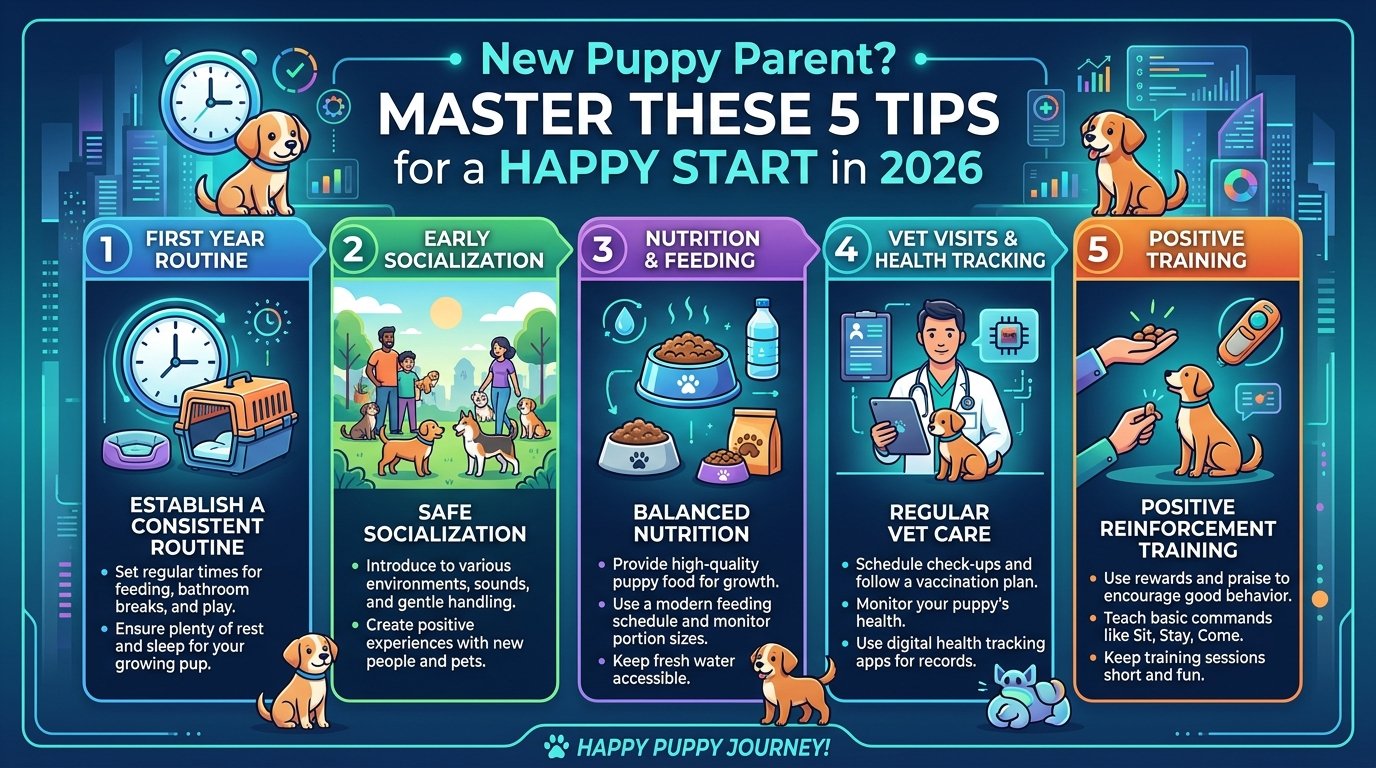
New Puppy Parent? Master These 5 Tips for a Happy Start in 2026
Establishing a Routine: The Foundation for Your New Puppy
Bringing home a new puppy is an incredibly exciting milestone, filled with boundless joy and playful chaos. As a new puppy parent, you’re embarking on a journey that requires patience, consistency, and a clear plan to ensure your furry friend thrives. The foundation for a happy, well-adjusted dog begins with establishing a solid routine from day one. This structured approach provides comfort, predictability, and helps your new puppy understand expectations, making the transition smoother for everyone involved. Without a consistent schedule, a puppy can become anxious or confused, leading to behavioral challenges.
Consistency in daily activities, from feeding times to potty breaks and playtime, minimizes stress and helps your puppy quickly learn the rhythm of their new home. Think of it as creating a predictable world where your new puppy can feel secure and confident. A well-structured routine also makes training more effective, as it leverages your puppy’s natural biological clocks and learning patterns. By setting these boundaries early, you’re laying the groundwork for a harmonious life together.
Potty Training Prowess
Potty training is often one of the first and most critical hurdles for a new puppy parent. Success hinges on a predictable schedule and constant supervision. Puppies have small bladders and need to relieve themselves frequently, especially after waking up, eating, drinking, and playing. Establishing a consistent potty schedule is non-negotiable for rapid progress.
Crate Training Essentials
Crate training is an invaluable tool for potty training and overall puppy management. A properly sized crate becomes your new puppy’s safe den, a place where they naturally won’t want to soil their sleeping area. Introduce the crate positively, making it a comfortable, inviting space with soft bedding and chew toys. Never use the crate as punishment; it should always be a haven.
Begin with short periods and gradually increase the time your puppy spends in the crate. Always take your puppy directly outside for a potty break immediately after releasing them from the crate. This reinforces the idea that the crate is for rest, and outside is for eliminating. Consistent positive reinforcement, like treats and praise for successful outdoor eliminations, solidifies the desired behavior.
Schedule and Consistency
A typical new puppy potty schedule includes taking them out every 1-2 hours initially, as well as upon waking, after meals, before bedtime, and after any significant play session. Stick to the same designated potty spot outside to help your puppy associate that area with relief. Be patient with accidents; they are part of the learning process. Clean them thoroughly with an enzymatic cleaner to eliminate odors that might attract your puppy back to the same spot indoors.
Keeping a log of potty breaks and successes can be incredibly helpful for tracking progress and identifying patterns. This data-driven approach allows you to adjust the schedule as your puppy grows and gains better bladder control. Remember, consistency is key; every family member should follow the same routine to avoid confusing your new puppy.
Feeding Schedules and Nutrition
Proper nutrition is paramount for your new puppy’s growth, development, and overall health. Just like potty training, feeding should adhere to a strict schedule. Free-feeding (leaving food out all day) can make potty training more challenging and can lead to overeating or pickiness. Instead, offer meals at specific times and remove any uneaten food after 15-20 minutes.
Choosing the Right Food
Selecting the right puppy food is a crucial decision for any new puppy owner. Look for a high-quality commercial puppy food that is specifically formulated for their age, breed size (small, medium, large, giant), and activity level. Consult your veterinarian for recommendations tailored to your new puppy’s individual needs. Premium puppy foods contain the necessary balance of protein, fats, vitamins, and minerals to support rapid growth.
Always follow the feeding guidelines on the food packaging, but also observe your puppy’s body condition. If they seem too thin or too heavy, adjust the portion sizes accordingly, consulting with your vet if you have concerns. Fresh water should always be available, especially during and after meals. Gradual transitions are vital when changing your new puppy’s food to avoid digestive upset. Mix a small amount of the new food with their old food, slowly increasing the new food ratio over 7-10 days.
Essential Socialization and Early Training for Your New Puppy
Bringing home a new puppy means you have a critical window for socialization and basic training. This period, roughly between 3 to 16 weeks of age, profoundly impacts your dog’s temperament and behavior throughout their life. Positive experiences during this time help your new puppy develop into a confident, friendly, and well-adjusted adult dog. Neglecting socialization can lead to fear, anxiety, and aggression towards unfamiliar people, dogs, or situations.
Early training isn’t just about teaching commands; it’s about building communication and trust between you and your new puppy. It helps them understand boundaries, develop self-control, and respond appropriately to various cues. This foundation makes future training much easier and strengthens your bond. Remember that every interaction is a learning opportunity for your new puppy.
Early Socialization Matters
Socialization means exposing your new puppy to a wide variety of sights, sounds, smells, people, places, and other friendly animals in a positive and controlled manner. The goal is to create positive associations with these new experiences, preventing fear or apprehension later in life. This is especially important for a new puppy.
Safe Encounters and Experiences
Start slowly and keep experiences positive. Introduce your new puppy to different types of people: men, women, children, people wearing hats, glasses, or uniforms. Expose them to various safe environments like parks (after vaccinations), pet-friendly stores, or friends’ homes. The key is to make these interactions pleasant and non-threatening. Carry treats and reward calm, confident behavior.
Consider enrolling your new puppy in a puppy kindergarten class. These classes offer a safe, supervised environment for puppies to interact with each other and learn basic obedience, all under the guidance of a professional trainer. This is an excellent way to continue their socialization in a structured setting. Ensure all interactions are positive; never force your puppy into a situation that frightens them. If your new puppy shows signs of stress, remove them from the situation and try again later with a more gradual approach.
Basic Commands and Positive Reinforcement
Training should begin the moment your new puppy arrives home. Start with basic commands like “sit,” “stay,” “come,” and “leave it.” Use positive reinforcement methods exclusively—treats, praise, and toys—to reward desired behaviors. Punishment can be counterproductive, damaging your bond and making your puppy fearful or resistant to learning.
Beyond “Sit” and “Stay”
Consistency is crucial for training. Use the same command words and hand signals every time, and ensure everyone in the household is on the same page. Keep training sessions short, fun, and frequent (5-10 minutes, several times a day) to maintain your puppy’s attention span. Start in a quiet environment with minimal distractions, gradually introducing more challenging settings as your new puppy masters each command.
Beyond basic obedience, teach your new puppy leash manners early on. Start by letting them wear a collar and then a harness for short periods, gradually adding the leash and practicing walking indoors before venturing outside. Desensitizing your puppy to handling—touching their paws, ears, and mouth—is also vital for vet visits and grooming throughout their life. This early training for your new puppy will pay dividends in their adult behavior.
Creating a Safe and Stimulating Environment
As a new puppy parent, ensuring your home is a safe haven for your curious explorer is paramount. Puppies investigate the world with their mouths, which means anything within reach can become a chew toy or a potential hazard. A well-prepared home prevents accidents and promotes healthy development, allowing your new puppy to explore safely and learn about their surroundings without constant danger.
Beyond safety, a stimulating environment is crucial for your puppy’s mental and physical well-being. Bored puppies are often destructive puppies. Providing appropriate toys, enrichment activities, and designated safe spaces helps channel their energy constructively, reducing the likelihood of unwanted behaviors like excessive chewing or digging. This foresight ensures your new puppy thrives.
Puppy-Proofing Your Home
Before your new puppy even sets paw indoors, take the time to thoroughly puppy-proof your living space. This involves looking at your home from a puppy’s perspective, which means getting down on your hands and knees to spot potential dangers. Electrical cords, toxic plants, small objects, and household chemicals are common culprits.
Hazard Identification Checklist
– Electrical Cords: Secure or cover all loose electrical cords. Consider cord protectors or tucking them away behind furniture. Unplug appliances when not in use.
– Toxic Plants: Remove or place out of reach any houseplants that are toxic to dogs (e.g., lilies, sago palms, azaleas). Check a comprehensive list of toxic plants.
– Small Objects: Pick up anything small enough for a puppy to swallow or choke on, such as coins, rubber bands, hair ties, children’s toys, and prescription pills.
– Household Chemicals: Store all cleaning supplies, medications, automotive fluids, and garden chemicals in secure, high-up cabinets.
– Trash Cans: Use sturdy trash cans with secure lids to prevent your new puppy from rummaging through them.
– Secure Cabinets: Install childproof latches on lower cabinets, especially those containing food or dangerous items.
– Gates and Barriers: Use baby gates to restrict access to certain rooms or areas of the house where your puppy might get into trouble or be unsupervised.
– Valuables: Store shoes, remote controls, books, and other personal items out of your puppy’s reach to prevent chewing.
The Right Gear: Beyond the Basics
While a collar, leash, food bowls, and a bed are obvious necessities, there are several other pieces of equipment that can significantly enhance your new puppy’s safety, training, and overall quality of life in 2026. Technology offers innovative solutions to common puppy challenges.
Comparison of Top Smart Puppy Gadgets
Smart gadgets can offer peace of mind and convenience for the modern new puppy parent. From monitoring your pup to ensuring they’re fed on time, these tools can be invaluable.
| Product | Price | Pros | Cons | Best For |
|---|---|---|---|---|
| Furbo Dog Camera | $169 – $250 | Two-way audio, treat tossing, bark alerts, 1080p HD camera with night vision. | Subscription needed for some advanced features, occasional connectivity issues. | Monitoring and interacting with your puppy while away from home. |
| PetSafe Smart Feed Automatic Feeder | $150 – $200 | Scheduled meals, flexible portions, slow feed option, smartphone control, compatible with dry/semi-moist food. | Requires Wi-Fi, occasional jamming with certain kibble sizes, battery backup required. | Ensuring consistent feeding schedules, especially for busy owners or puppies on specific diets. |
| Whistle GO Explore GPS Tracker | $100 – $130 (plus subscription) | Real-time GPS tracking, activity and sleep monitoring, long battery life (up to 20 days), health insights. | Requires monthly subscription, somewhat bulky for very small puppies. | Tracking adventurous puppies, monitoring health, and ensuring peace of mind regarding location. |
| Wagz Serve Smart Feeder | $299 – $350 | Facial recognition for multiple pets, portion control, video monitoring, integrated scale for precise feeding. | High price point, complex setup, subscription for advanced features. | Multi-pet households, precise diet management for puppies with specific needs. |
Investing in durable, appropriate chew toys is also essential. Look for toys that are safe for your puppy’s chewing style and size. Puzzle toys that dispense treats can provide excellent mental stimulation and keep your new puppy engaged. A comfortable, washable bed and a variety of enrichment toys are key components of a stimulating and safe environment.
Health and Wellness: Proactive Care for Your Growing Companion
The health of your new puppy is foundational to their happiness and longevity. Proactive veterinary care, a balanced diet, and consistent hygiene practices are non-negotiable responsibilities for every new puppy parent. Establishing good health habits early on will save you stress and potential expenses down the line, ensuring your furry friend grows into a robust and healthy adult. A new puppy requires careful attention to their developing immune system and overall physical needs.
Understanding the common health challenges for puppies and knowing when to seek professional help is also crucial. From vaccinations to parasite prevention and recognizing early signs of illness, being informed empowers you to make the best decisions for your new puppy’s well-being. This commitment to health builds a strong, trusting relationship with your veterinarian and promotes a long, healthy life for your companion.
First Vet Visits and Vaccinations
One of the first things you should do after bringing home your new puppy is schedule a vet visit. This initial check-up is vital to assess your puppy’s overall health, screen for any congenital issues, and ensure they are on track with their vaccination schedule. The veterinarian will also discuss a deworming protocol, as most puppies are born with or acquire intestinal parasites.
Puppies require a series of vaccinations to protect them from common and potentially fatal diseases like distemper, parvovirus, adenovirus, and rabies. These are usually given in a series over several weeks, concluding around 16 weeks of age. Your vet will create a personalized vaccination plan based on your new puppy’s age, health, and local risk factors. Do not delay these critical appointments.
Parasite Prevention and Pet Insurance
Beyond internal parasites, external parasites like fleas and ticks pose significant health risks. Your vet will recommend appropriate monthly preventatives that are safe and effective for your puppy’s age and weight. Consistent use of these preventatives is crucial, especially if your new puppy spends time outdoors or interacts with other animals.
Consider investing in pet insurance as soon as you bring your new puppy home. Accidents and illnesses can happen unexpectedly, and veterinary care can be costly. Pet insurance can provide financial relief and allow you to make medical decisions based on what’s best for your puppy, rather than worrying about the bill. Research different plans and choose one that fits your budget and offers comprehensive coverage.
Dental Hygiene Early On
While often overlooked, starting dental hygiene early with your new puppy is incredibly beneficial. Puppy teeth are temporary, but establishing a routine of brushing their teeth can prevent significant dental problems later in life. Introduce a puppy toothbrush and enzymatic toothpaste (never use human toothpaste) slowly and positively.
Begin by letting your puppy lick the toothpaste off your finger, then introduce the brush for short periods. Even a few seconds of brushing daily can make a difference. Early exposure makes it a less stressful experience as they grow. Your vet can also provide guidance on dental chews and other products that support oral health.
Building a Lifelong Bond: Patience, Play, and Understanding
The journey with your new puppy is more than just training and health; it’s about forging a deep, lasting connection built on trust, love, and mutual understanding. This bond is the cornerstone of a happy life together and influences every aspect of your new puppy’s behavior and well-being. Cultivating this relationship requires patience, consistent positive interaction, and a willingness to understand their unique personality and needs.
Remember that your new puppy is learning to navigate a brand new world, and you are their primary guide. Every interaction, every play session, and every moment of calm shared contributes to the strength of your bond. Embrace the challenges with empathy and celebrate every small victory. This approach fosters a resilient and loving companion.
Understanding Puppy Body Language
Dogs communicate primarily through body language, and learning to interpret your new puppy’s signals is vital for a strong bond. Pay attention to their tail position, ear set, facial expressions, and overall posture. A wagging tail doesn’t always mean happiness; a stiff, low wag can indicate unease. Similarly, yawning or lip-licking can be signs of stress, not just tiredness.
Understanding these cues allows you to respond appropriately to your puppy’s needs, comfort them when they’re scared, and avoid situations that cause them discomfort. For example, if your new puppy shows signs of fear around another dog, you can intervene and remove them from the situation before it escalates. Several excellent resources and books are available to help new puppy parents decode canine communication.
The Power of Play
Play is not just fun; it’s a critical component of your new puppy’s development and an incredibly powerful tool for bonding. Regular play sessions help your puppy burn off excess energy, preventing destructive behaviors, and provide mental stimulation. It also mimics natural canine behaviors and allows them to express their instincts in a healthy way.
Engage in a variety of play activities with your new puppy:
– Fetch: A classic game that combines exercise with impulse control (releasing the toy).
– Tug-of-War: When played correctly (with rules like “drop it” on command), this can build confidence and teach bite inhibition.
– Puzzle Toys: These challenge your puppy mentally as they figure out how to get treats, preventing boredom.
– Interactive Games: Hide-and-seek or nose work games engage your puppy’s senses and build problem-solving skills.
Always end play sessions on a positive note, perhaps with a calm petting session, to reinforce the loving connection. Regular, structured playtime throughout the day is essential for a well-adjusted and happy new puppy. This dedicated time also reinforces your role as their trusted companion and caregiver, deepening the emotional connection you share.
Bringing a new puppy into your life in 2026 is a rewarding adventure that requires dedication and a loving heart. By mastering the tips outlined here—establishing routines, prioritizing socialization and training, creating a safe home, ensuring proactive health care, and focusing on building a deep bond—you are setting your furry companion up for a lifetime of happiness and good health. Remember that patience, consistency, and positive reinforcement are your greatest tools. Every moment you invest in your new puppy’s early development pays dividends in a well-adjusted, joyful adult dog. Enjoy every wag, every cuddle, and every playful moment as you embark on this incredible journey together.
For more insights or collaboration opportunities, visit www.agentcircle.ai.
Frequently Asked Questions (FAQ)
How long does it take to fully potty train a new puppy?
Potty training duration varies greatly depending on the puppy’s age, breed, and consistency of training. Generally, it can take anywhere from a few weeks to several months. Most puppies have reliable bladder control by 4-6 months of age, but consistency and patience from the new puppy parent are crucial.
What is the most important thing to teach a new puppy first?
While basic obedience commands like “sit” are important, the absolute most important things to teach a new puppy first are bite inhibition (how to control the force of their bite) and socialization (how to interact positively with the world). These foundational skills prevent future behavioral problems and ensure a well-adjusted dog.
When can my new puppy safely go outside to meet other dogs?
Your new puppy can safely meet fully vaccinated, healthy adult dogs in low-risk environments after they have completed their initial vaccination series (typically around 16 weeks of age). Always consult your veterinarian for specific guidance based on your puppy’s health and local disease prevalence. Puppy kindergarten classes offer a supervised and safe environment for early socialization.
How much exercise does a new puppy need?
Puppies need frequent, short bursts of exercise rather than long, strenuous activities. A good rule of thumb is 5 minutes of exercise per month of age, twice a day (e.g., a 3-month-old puppy needs 15 minutes of exercise, twice daily). This protects their developing joints and prevents overexertion. Mental stimulation through training and puzzle toys is also vital.
What should I do if my new puppy is constantly biting or nipping?
Puppy nipping is normal behavior, but it needs to be managed. When your new puppy nips too hard, immediately yelp loudly (“Ouch!”) and withdraw attention (turn away, leave the room) for 30-60 seconds. This teaches them that hard biting ends play. Provide appropriate chew toys for redirection. If nipping persists or is aggressive, seek professional help from a certified dog trainer or behaviorist.
References and Further Reading
- ASPCA: New Puppy Checklist & Care
- AKC: Puppy Training Timeline
- AVMA: Pet Vaccinations
- The Humane Society of the United States: Dog Body Language