
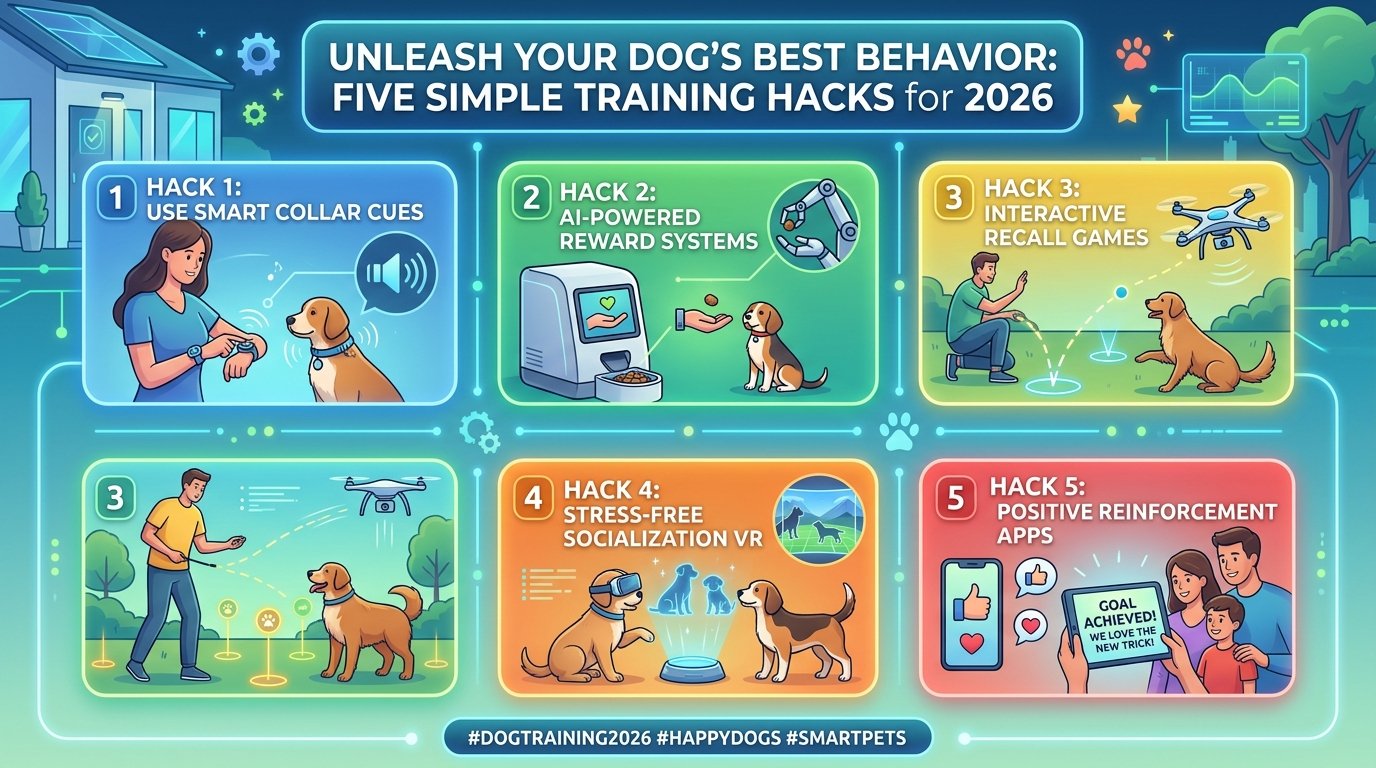
Transform your dog’s behavior in 2026 with 5 simple, effective dog training hacks. Discover positive reinforcement, consistency, tech tools, and more for a well-behaved companion.
Every dog owner dreams of a well-behaved, joyful companion. Yet, navigating the complexities of canine communication and behavior can sometimes feel overwhelming. The good news is that achieving remarkable results in dog training doesn’t require a miracle; it requires strategy, patience, and the right approach. With the advent of new insights and accessible tools, dog training is more achievable than ever. This guide will walk you through five simple yet incredibly powerful hacks designed to unleash your dog’s best behavior in 2026, creating a stronger bond and a happier household.
The Foundation: Mastering Positive Reinforcement
At the heart of effective dog training lies positive reinforcement. This method focuses on rewarding desired behaviors, making it more likely your dog will repeat them. Instead of punishing unwanted actions, we teach our dogs what to do, fostering a trusting relationship built on mutual respect.
Understanding the Principles of Positive Reinforcement
Positive reinforcement isn’t just about giving treats; it’s about identifying what motivates your individual dog. For some, it might be a high-value treat, for others, a favorite toy, or even enthusiastic praise. The key is to deliver the reward immediately after the desired behavior occurs, so your dog clearly associates the action with the positive outcome.
Timing is Everything
The window for effective reinforcement is incredibly small—just 1-3 seconds. If you delay, your dog might associate the reward with a different action they just performed. Use a marker signal, like a clicker or a verbal “Yes!”, precisely at the moment of the desired behavior, followed immediately by the reward.
Varying Rewards for Engagement
Don’t always use the same treat or praise. Just like humans, dogs appreciate variety. Rotate between different types of treats, toys, and forms of affection to keep them engaged and excited about dog training sessions. This also helps prevent your dog from becoming bored or desensitized to a single reward.
For example, when teaching “sit,” once your dog’s rear touches the ground, mark the behavior and reward. If your dog gets up before you can reward, don’t fuss; simply reset and try again. The absence of a reward for the incorrect action is enough information for them.
The Power of Consistency and Routine in Dog Training
Dogs thrive on predictability. Consistency in commands, expectations, and daily routines is paramount for successful dog training. When rules are clear and consistently enforced, your dog learns faster and feels more secure in their environment, leading to fewer behavioral issues.
Establishing Clear Rules for Everyone
Every member of the household must be on the same page regarding rules and commands. If one person allows jumping on the couch while another forbids it, your dog will become confused. Hold a family meeting to discuss and agree upon boundaries and how to respond to specific behaviors.
Unified Command Language
Use the exact same command word for each action. If one person says “sit” and another says “sit down,” your dog has to learn two different cues for the same behavior. Choose simple, distinct words and stick to them. This greatly simplifies the learning process for your canine companion during dog training.
Consistent Consequences and Rewards
Just as rewards must be consistent, so must the consequences for undesired behaviors. This doesn’t mean punishment; it means consistently redirecting or withholding attention. For instance, if your dog jumps up, consistently turn your back and ignore them until all four paws are on the floor, then reward.
Building a Reliable Routine
A predictable daily routine helps reduce anxiety and establishes clear expectations. Dogs learn when to expect walks, meals, playtime, and quiet time, which can preemptively address behaviors like excessive barking or house-soiling.
For instance, if walks always happen at 7 AM and 5 PM, your dog learns to anticipate these times and is less likely to pester you throughout the day. This structure provides a sense of security and significantly aids in dog training progress.
Beyond the Basics: Socialization and Exposure for Confident Pups
Proper socialization is more than just letting your dog play with other dogs; it’s about exposing them to a wide variety of sights, sounds, people, and environments in a positive way. This builds resilience and confidence, preventing fear-based aggression or anxiety later in life.
The Critical Socialization Window
For puppies, the critical socialization window is typically between 3 and 16 weeks of age. During this time, positive experiences are crucial. However, socialization is an ongoing process that should continue throughout a dog’s life, adapting as they grow.
Safe and Controlled Exposures
Introduce new stimuli gradually and always ensure your dog feels safe and comfortable. Avoid overwhelming situations. Start with short, positive encounters. If your dog shows signs of stress (tail tucked, yawning, lip licking), gently remove them from the situation and try again later with less intensity.
– Introduce your dog to different types of people: men, women, children, people with hats, people on bikes, people with umbrellas.
– Expose them to various sounds: traffic, sirens, vacuums, thunderstorms (start with low volume recordings).
– Visit different environments: parks, pet-friendly stores, bustling sidewalks, quiet trails.
– Allow positive interactions with other vaccinated, friendly dogs under supervision.
Ongoing Exposure for Adult Dogs
Even adult dogs benefit from continued socialization and exposure. Regular walks in new areas, visits to dog-friendly cafes, or enrollment in advanced dog training classes can keep their social skills sharp and prevent regression. A well-socialized dog is a joy to live with, adapting easily to new situations.
Remember, the goal is not for your dog to love every person or dog they meet, but rather to be neutral and calm in their presence. This reduces stress for both you and your dog, making everyday life far more pleasant.
Leveraging Technology for Smarter Dog Training
The world of dog training has evolved significantly, with technology now offering innovative tools to enhance our efforts. From smart collars to treat-dispensing cameras, these gadgets can provide valuable assistance, especially when you can’t be physically present or need data-driven insights.
Smart Gadgets and Apps: Your Training Allies
These tools can help monitor your dog’s activity, track their progress, and even facilitate remote training. They are not replacements for hands-on interaction but powerful complements to your existing dog training regimen.
Comparison of Top Smart Gadgets for Dog Training
| Product | Price | Pros | Cons | Best For |
|---|---|---|---|---|
| Whistle GO Explore GPS Tracker | $129 + subscription | GPS tracking, activity monitoring, health insights, long battery life. | Requires monthly subscription, somewhat bulky for small dogs. | Active dogs, escape artists, health-conscious owners. |
| Furbo Dog Camera with Treat Tosser | $169 | Two-way audio, HD camera, treat tossing, bark alerts, training aid. | Treats can get stuck, requires Wi-Fi connection, higher price point. | Owners wanting to interact remotely, manage separation anxiety, remote dog training. |
| PetSafe Smart Feed Automatic Feeder | $149 | Scheduled meals, slow feed option, portion control, smartphone app control. | Can be complex to set up, requires consistent Wi-Fi. | Busy owners, dogs needing weight management, routine feeders. |
How to Integrate Tech into Your Training
Start by identifying a specific challenge you want to address. For example, if your dog suffers from separation anxiety, a Furbo camera can help you monitor and soothe them remotely, even tossing a treat for calm behavior. If you’re tracking fitness goals, a Whistle device provides data to adjust exercise routines.
Always ensure the technology you choose is safe and comfortable for your dog. Introduce new gadgets slowly, associating them with positive experiences, much like any other aspect of dog training. These tools are designed to make your life easier and your dog’s training more efficient.
Mental Enrichment: The Unsung Hero of Good Behavior
Physical exercise is vital, but don’t underestimate the power of mental stimulation. A mentally fatigued dog is often a well-behaved dog. Enrichment activities tap into your dog’s natural instincts, preventing boredom and destructive behaviors born from under-stimulation.
Beyond Walks: Engaging Your Dog’s Brain
Many behavioral issues stem from a lack of mental engagement. Dogs are intelligent creatures that need to “work” their brains. Simply providing toys isn’t always enough; the activities need to be challenging and rewarding.
Puzzle Toys and Food Dispensing Toys
These are excellent for keeping your dog occupied and using their problem-solving skills. Stuff KONGs with peanut butter or treats, hide kibble in snuffle mats, or use interactive puzzle feeders. These can turn mealtime into a stimulating dog training exercise.
– KONG Classic: Durable rubber toy for stuffing with treats, keeps dogs busy.
– Snuffle Mats: Fabric mats with fringes where you can hide kibble or treats, encouraging sniffing and foraging.
– Puzzle Feeders: Require manipulation (pushing, lifting) to release food, challenging the dog mentally.
Scent Work and Nose Games
A dog’s primary sense is smell. Engaging their nose is incredibly enriching and tiring. Simple scent games can be played right in your home or backyard.
How to Start Scent Work
1. Start simple: Hide a treat under one of three cups and let your dog find it.
2. Increase difficulty: Hide treats in different rooms, under blankets, or behind furniture.
3. Introduce specific scents: You can even get kits to train your dog to find particular odors, similar to professional detection work. This is a fantastic form of dog training that taps into their innate abilities.
Just 15-20 minutes of dedicated mental stimulation can be as tiring as a long walk for some dogs. Integrating these activities into their daily routine will significantly improve their overall behavior and satisfaction.
Your Journey to a Well-Behaved Dog
Building a strong, positive relationship with your dog through effective dog training is an ongoing journey, not a destination. By embracing positive reinforcement, maintaining consistency, prioritizing comprehensive socialization, intelligently using modern technology, and providing ample mental enrichment, you are setting your canine companion up for success. These five hacks are simple, yet profoundly impactful, transforming not just your dog’s behavior, but also strengthening the bond you share.
Remember that patience, understanding, and a willingness to adapt your approach are your most powerful tools. Every dog is an individual, and what works for one might need slight adjustments for another. Start implementing these strategies today, and watch your dog thrive, becoming the best companion they can be in 2026 and beyond. For more insights or collaboration opportunities, visit www.agentcircle.ai.
Frequently Asked Questions About Dog Training
Q: How long should a dog training session be?
A: Short, frequent sessions are more effective than long, infrequent ones. Aim for 5-10 minute sessions, 2-3 times a day, especially for puppies or new behaviors. This keeps your dog engaged and prevents them from getting bored or overwhelmed.
Q: Is it ever too late to start dog training?
A: Absolutely not! While puppies have a critical socialization window, adult and senior dogs are perfectly capable of learning new behaviors. It might take a bit more patience and consistency, but positive reinforcement methods work for dogs of all ages. Many rescue organizations specialize in adult dog training.
Q: My dog isn’t food motivated. What other rewards can I use?
A: Not all dogs are driven by food. Experiment with different high-value motivators: a favorite toy (tug, fetch), enthusiastic verbal praise, a good scratch behind the ears, or access to a desired activity (e.g., “sit” to get the leash put on). Observe what truly excites your dog and use that as your reward in dog training.
Q: How do I stop my dog from barking excessively?
A: Excessive barking often stems from boredom, anxiety, or seeking attention. Address the root cause through increased mental and physical exercise, consistent dog training (teaching a “quiet” command), reducing triggers, and ignoring attention-seeking barks. Consult a professional trainer if the issue persists or is severe.
 PRINCE2030