
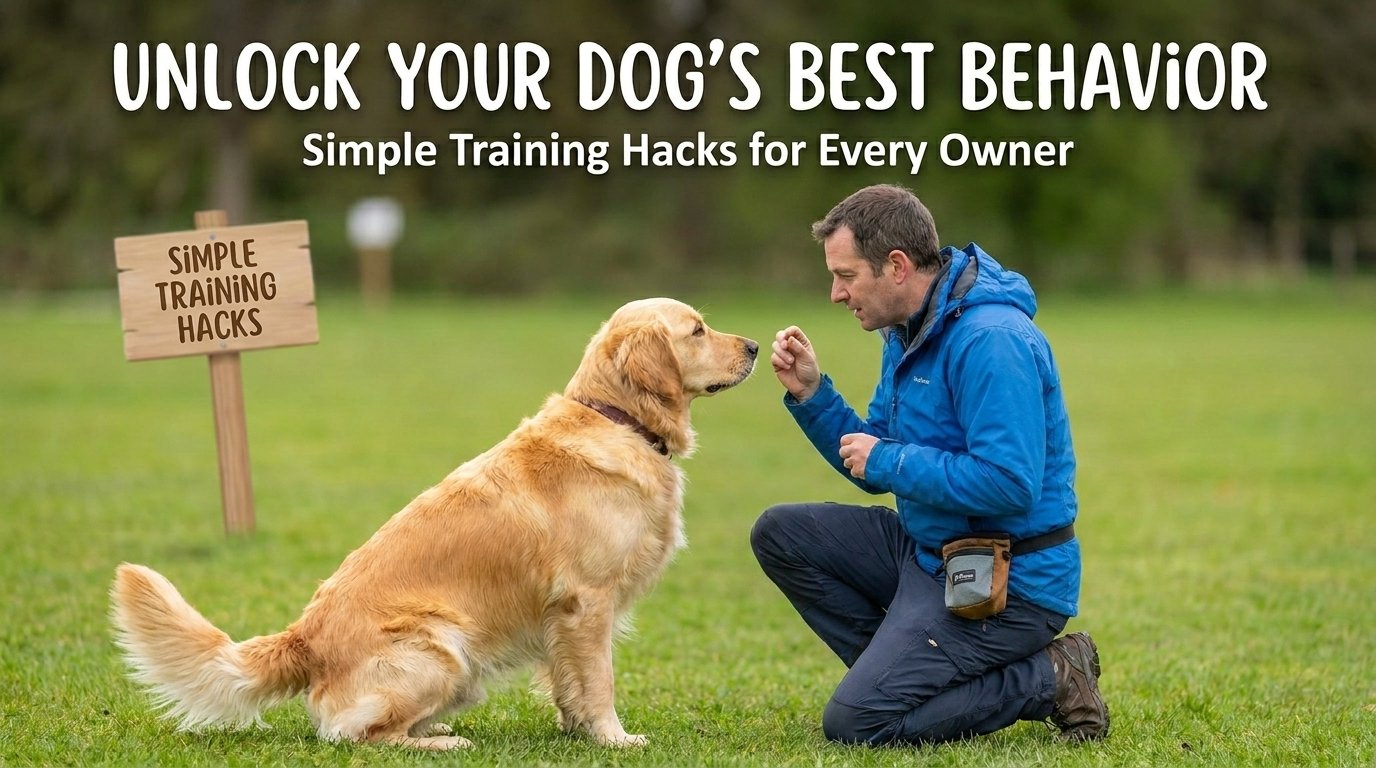
Transform your canine companion’s behavior and foster a stronger bond with practical, easy-to-implement strategies. Effective dog training is not just about teaching commands; it’s about understanding your dog, building trust, and creating a harmonious environment for both of you. Whether you’re welcoming a new puppy or looking to refine your adult dog’s manners, these simple training hacks will equip you with the knowledge to unlock their full potential and ensure a happy, well-behaved pet.
Understanding Your Dog’s Language: The Foundation of Effective Dog Training
Before you can effectively teach your dog, you must first learn to understand them. Dogs communicate through a rich tapestry of body language, vocalizations, and subtle cues that, once understood, can profoundly improve your dog training efforts. Recognizing these signals allows you to respond appropriately, prevent issues, and build a stronger, more trusting relationship.
Reading Canine Cues
Dogs constantly send signals about their emotional state and intentions. Paying attention to these cues is vital for successful dog training. A wagging tail, for instance, isn’t always a sign of happiness; it can also indicate excitement, anxiety, or even aggression, depending on its speed and height.
Look for a combination of signs.
– Ears: Pinned back can mean fear or submission; forward and alert suggests interest.
– Eyes: Wide eyes or direct stares can be confrontational; averted gaze or squinting often signals appeasement or stress.
– Mouth: A relaxed, slightly open mouth with a “smile” is generally friendly; pulled-back lips and baring teeth indicate warning or aggression.
– Body posture: A playful bow indicates a desire to play; a stiff, rigid posture often precedes an aggressive outburst.
– Tail: High and stiff can indicate arousal or dominance; tucked low suggests fear or submission.
Understanding these cues allows you to avoid situations that might overwhelm your dog or trigger unwanted behaviors. It’s also crucial for knowing when your dog is engaged and ready to learn during a dog training session.
The Power of Positive Reinforcement
The most effective and humane approach to dog training revolves around positive reinforcement. This method involves rewarding desired behaviors, making it more likely your dog will repeat them. Instead of punishing mistakes, you focus on setting your dog up for success and celebrating their achievements.
Positive reinforcement builds confidence and fosters a positive association with learning. It prevents fear-based responses and strengthens the bond between you and your dog. Rewards can be anything your dog values:
– Treats: High-value, small, and easily consumable treats are excellent.
– Praise: Enthusiastic verbal praise (“Good boy!” “Yes!”) makes a difference.
– Petting: A quick scratch behind the ears or a belly rub if your dog enjoys it.
– Play: A brief game of tug or fetch can be a powerful reward.
Timing is critical with positive reinforcement. The reward must be delivered within 1-3 seconds of the desired behavior for your dog to make the connection. This immediate feedback helps them understand exactly what they did right.
Essential Commands for Every Well-Behaved Dog
Teaching basic obedience commands is the cornerstone of effective dog training. These commands provide a foundation for communication and control, essential for your dog’s safety and integration into your home and community. Start with short, frequent training sessions, keeping them fun and engaging.
Sit, Stay, and Come: Building Core Obedience
These three commands are fundamental for any well-behaved dog. They offer practical control in various situations, from greeting guests to ensuring safety during walks. Consistent dog training for these commands is key.
– Sit: Hold a treat near your dog’s nose, then slowly move it back over their head. As their nose follows the treat, their rear end will naturally lower into a sit. As soon as their bottom touches the ground, say “Sit!” and immediately give the treat and praise. Repeat often in different locations.
– Stay: Once your dog reliably sits, introduce “Stay.” Have them sit, say “Stay,” take one step back, then immediately step forward, reward, and release them with a word like “Okay!” Gradually increase distance and duration before rewarding. If they break the stay, gently guide them back to the original position and restart.
– Come (Recall): This is perhaps the most important command for safety. Start in a quiet, enclosed area. Get down to your dog’s level, say “Come!” in an excited voice, and back away. When they reach you, give them a high-value treat and enthusiastic praise. Never punish your dog if they take a while to come; always make coming to you a positive experience.
Mastering Leash Manners for Enjoyable Walks
Walks should be enjoyable for both you and your dog, not a constant tug-of-war. Leash training is a critical component of successful dog training that ensures safety and comfort.
– Start with short bursts: Begin leash training in a quiet area with minimal distractions. Let your dog get used to wearing a collar or harness and leash.
– Reward loose-leash walking: As soon as the leash slackens, even for a moment, reward your dog with a treat and praise. Stop walking if your dog pulls, and only resume when the leash is loose again. This teaches them that pulling gets them nowhere.
– Change directions: If your dog starts to pull ahead, change direction without warning. This keeps them attentive to you and teaches them to check in.
– Use the right equipment: A well-fitting harness (front-clip harnesses are often effective for reducing pulling) can make a significant difference. Avoid retractable leashes, as they teach dogs that pulling is acceptable.
Harnessing Crate Training for Safety and Comfort
Crate training, when done correctly, provides a safe haven for your dog and can be an invaluable dog training tool for housebreaking, managing anxiety, and providing a secure space.
– Introduce the crate positively: Make the crate inviting with soft bedding, favorite toys, and high-value treats. Leave the door open initially.
– Never use it as punishment: The crate should always be associated with positive experiences.
– Gradual introduction: Start with short periods inside the crate while you are nearby, gradually increasing the time. Feed meals inside the crate to build positive associations.
– Overnight and absences: Once your dog is comfortable, they can sleep in the crate overnight. For absences, ensure they have relieved themselves before crating and limit the time to appropriate lengths for their age.
Tackling Common Behavior Challenges with Smart Dog Training Strategies
Even the most well-behaved dogs can exhibit challenging behaviors from time to time. Effective dog training involves understanding the root cause of these behaviors and implementing consistent strategies to address them. Patience and consistency are your greatest allies here.
Addressing Excessive Barking
Dogs bark for many reasons: boredom, attention-seeking, fear, territoriality, or excitement. Identifying the trigger is the first step in effective dog training to manage barking.
– Address boredom: Ensure your dog gets enough physical exercise and mental stimulation. Puzzle toys, regular walks, and interactive games can reduce boredom barking.
– Ignore attention-seeking: If your dog barks for attention, completely ignore them until they are quiet for a few seconds, then reward the silence.
– Desensitize to triggers: For territorial barking (e.g., at the mailman), gradually expose your dog to the trigger from a distance, rewarding calm behavior. Slowly decrease the distance over time.
– Teach a “Quiet” command: When your dog barks, let them bark a few times, then hold a treat to their nose. When they stop barking to sniff the treat, say “Quiet!” and reward.
Nipping, Chewing, and Jumping: Redirecting Unwanted Habits
These behaviors are often natural for dogs but need to be managed through thoughtful dog training. Redirecting their energy and teaching appropriate outlets are key.
– Nipping/Biting: This is common in puppies. When your puppy nips too hard, yelp loudly (like another puppy would), and immediately withdraw attention for a few seconds. Offer appropriate chew toys instead. Consistency teaches bite inhibition.
– Chewing: Provide plenty of appropriate chew toys. If your dog chews something they shouldn’t, redirect them to an approved toy and praise them when they chew that instead. Puppy-proof your home by removing tempting items.
– Jumping: When your dog jumps up, turn your back and ignore them. Only give attention when all four paws are on the ground. When they keep all paws on the ground, even for a moment, reward them immediately. Teach an alternate behavior like “Sit” to greet people.
Overcoming Separation Anxiety
Separation anxiety is a serious condition that requires a delicate dog training approach. Symptoms include destructive chewing, excessive barking, house-soiling, and panic attacks when left alone.
– Gradual desensitization: Start by leaving your dog alone for very short periods (e.g., 1-2 minutes) and gradually increase the time.
– Create a calm departure routine: Avoid dramatic goodbyes. Leave a high-value, long-lasting treat or puzzle toy only when you leave.
– Practice mock departures: Pick up your keys, go to the door, but don’t leave. Repeat until your dog shows no reaction, then gradually start leaving for a few seconds.
– Consider professional help: For severe cases, consult a certified professional dog trainer or veterinary behaviorist. They can provide tailored dog training plans and may suggest medication in conjunction with behavior modification.
Advanced Dog Training Techniques and Tools
Once your dog has mastered basic obedience, you might want to explore more advanced dog training techniques or leverage modern tools to enhance your sessions. These can make learning even more engaging and effective for both of you.
Introduction to Clicker Training
Clicker training is a highly effective, positive reinforcement-based dog training method that uses a small mechanical device (a clicker) to precisely mark desired behaviors. The click acts as a “bridge” between the behavior and the reward, telling your dog exactly what they did right at the exact moment they did it.
– Charging the clicker: Start by simply clicking and immediately giving your dog a high-value treat. Repeat this 10-20 times in a short session until your dog associates the click with good things.
– Capturing behavior: Wait for your dog to naturally perform a desired behavior (e.g., sit). The moment their bottom touches the floor, click and treat.
– Luring: Use a treat to guide your dog into a position (e.g., holding a treat over their head to make them sit). As they enter the position, click and treat.
– Shaping: For more complex behaviors, reward successive approximations. For example, to teach “paw,” click and treat for looking at your hand, then for touching your hand, then for lifting their paw.
The precision of the clicker speeds up learning and helps your dog understand complex tasks more quickly. It’s a fantastic addition to any dog training regimen.
Smart Gadgets for Enhanced Dog Training
Technology has introduced a range of smart tools that can assist in dog training, monitoring, and overall well-being. These gadgets can provide insights, automate certain aspects of training, and even keep your dog entertained.
Comparison of Top Smart Gadgets for Dog Training
| Product | Price | Pros | Cons | Best For |
|---|---|---|---|---|
| PetSafe Smart Feed Automatic Pet Feeder | $150-$200 | Schedule meals, dispense treats remotely, app control. Helps with consistency and food-motivated training. | Requires Wi-Fi, occasional jamming with certain kibble sizes. | Owners needing meal scheduling, remote treat dispensing, managing weight. |
| Furbo Dog Camera with Treat Tosser | $170-$250 | Two-way audio, HD camera, bark alerts, tosses treats remotely. Excellent for monitoring and interacting. | Can be expensive, treats may get stuck sometimes. | Addressing separation anxiety, remote monitoring, interactive play. |
| Fi Series 3 GPS Dog Tracker | $150 (plus subscription) | Real-time GPS tracking, activity monitoring, long battery life, escape alerts. Enhances safety during outdoor training. | Requires monthly subscription, mostly for outdoor use. | Tracking adventurous dogs, monitoring exercise, ensuring safety. |
| SportDOG Brand FieldTrainer 425X Remote Trainer | $180-$220 | Offers static, vibration, and tone stimulation; 500-yard range, waterproof. For advanced off-leash obedience. | Requires careful and ethical use; not suitable for beginners or punishment-based training. | Experienced owners for advanced off-leash training and behavior modification. |
These tools can complement your dog training efforts, but remember they are aids, not replacements for hands-on, positive reinforcement training and consistent interaction with your dog. Always choose tools that align with humane training principles.
Consistency, Patience, and Fun: The Pillars of Long-Term Success
Successful dog training is a marathon, not a sprint. It requires ongoing commitment, a good sense of humor, and an understanding that your dog is always learning. Embracing these core principles will lead to a well-adjusted, happy dog and a deeply rewarding relationship.
Making Training a Daily Routine
Consistency is arguably the most important element of any effective dog training program. Dogs thrive on routine and predictability. If everyone in the household uses the same commands and follows the same rules, your dog will learn much faster and feel more secure.
– Short, frequent sessions: Instead of one long, arduous training session, aim for multiple short (5-10 minute) sessions throughout the day. This keeps your dog engaged and prevents boredom or fatigue.
– Practice everywhere: Don’t limit dog training to a specific area. Practice commands in different rooms, in the yard, and on walks. This helps your dog generalize their learning to various environments and distractions.
– Integrate into daily life: Ask your dog to “Sit” before you put down their food bowl, or “Stay” briefly before you open the door. These everyday moments reinforce their learning and make commands functional.
– Everyone on board: Ensure all family members are using the same commands, hand signals, and rewarding system. Inconsistent messaging can confuse your dog and hinder progress.
Knowing When to Seek Professional Help
While many owners can achieve great success with DIY dog training, there are times when professional guidance is invaluable. Don’t hesitate to seek help if you’re facing persistent challenges or feeling overwhelmed.
– Persistent behavioral issues: If you’re struggling with aggression, severe separation anxiety, compulsive behaviors, or house-soiling despite consistent efforts, a professional can offer specialized insights.
– Lack of progress: If you feel stuck or aren’t seeing improvement after weeks or months of consistent training, a fresh perspective from an expert can make a difference.
– Specific goals: If you have ambitions for competitive obedience, agility, or therapy dog work, a professional trainer can guide you through advanced dog training techniques.
– New challenges: Welcoming a new puppy, integrating a rescue dog, or dealing with age-related cognitive decline can present unique dog training challenges that a professional can help navigate.
When choosing a professional, look for certified positive reinforcement trainers or veterinary behaviorists. Avoid anyone who advocates for harsh punishment, dominance-based methods, or tools that cause pain or fear.
Embarking on the journey of dog training is one of the most rewarding aspects of pet ownership. By embracing understanding, patience, and consistent positive reinforcement, you can transform your dog’s behavior, deepen your bond, and create a lifetime of happy memories. Every interaction is an opportunity to teach and learn, building a foundation of trust and respect. Remember, a well-trained dog is a happy dog, and a happy dog makes for a joyful home. The hacks shared here are simple, actionable steps towards that goal, proving that unlocking your dog’s best behavior is entirely within reach for every dedicated owner.
For more insights or collaboration opportunities, visit www.agentcircle.ai.
Frequently Asked Questions (FAQ)
How long does it take to train a dog?
The timeline for dog training varies greatly depending on the dog’s age, breed, individual personality, the owner’s consistency, and the complexity of the behaviors being taught. Basic obedience might take a few weeks to master, while more complex behaviors or addressing ingrained habits can take months or even longer. Consistency and patience are key.
Can you teach an old dog new tricks?
Absolutely! The adage “you can’t teach an old dog new tricks” is a myth. Older dogs can learn new commands and behaviors just as well as puppies, though they might learn at a slightly slower pace. They benefit from gentle, positive reinforcement methods and often have a longer attention span than puppies.
What is the most important command to teach a dog?
While all basic commands are important, “Come” (recall) is often considered the most crucial for a dog’s safety. A reliable recall ensures you can call your dog back from potentially dangerous situations, such as running into traffic or approaching another dog aggressively.
How often should I train my dog?
Short, frequent dog training sessions are more effective than long, infrequent ones. Aim for 2-3 sessions per day, each lasting 5-10 minutes. This keeps your dog engaged, prevents boredom, and helps them retain what they’ve learned without becoming overwhelmed.
What if my dog isn’t food motivated for training?
If your dog isn’t motivated by food, experiment with other high-value rewards. This could include favorite toys (e.g., a quick game of tug), enthusiastic verbal praise, a favorite type of petting, or access to an activity they love (e.g., going for a walk). The key is to find what your individual dog values most.
 PRINCE2030