Banish These 5 Common Dog Behavior Problems for Good in 2026
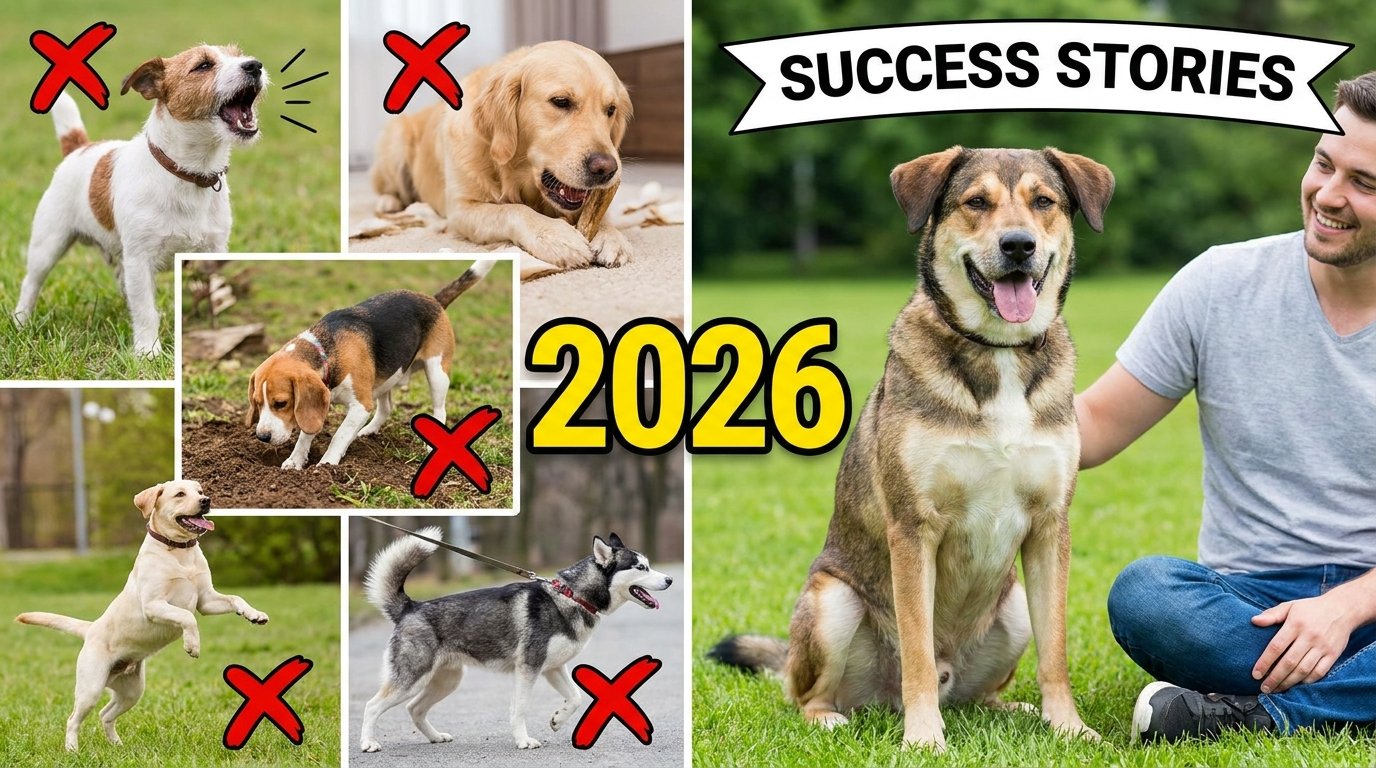

Every dog owner dreams of a perfectly behaved canine companion, but the reality often involves a few frustrating habits. From incessant barking to destructive chewing, these common dog behavior challenges can test even the most patient pet parent. Understanding the root causes of these behaviors is the first step towards a peaceful coexistence with your furry friend.
Fortunately, with the right approach and consistent training, you can transform your dog’s habits for good. This comprehensive guide will equip you with actionable strategies to address five widespread dog behavior problems, setting you and your pet up for success.
Understanding and Addressing Excessive Barking
Excessive barking is one of the most common complaints among dog owners and their neighbors. While barking is a natural form of canine communication, constant or unwarranted barking can be disruptive and stressful. Identifying why your dog barks is crucial to implementing an effective solution for this specific dog behavior problem.
Dogs bark for various reasons: boredom, fear, territorial instincts, attention-seeking, or even excitement. A deep dive into the context of their barking will reveal the underlying motivation. Is it when someone approaches the door? When they are left alone? Or perhaps when they see other dogs during walks?
Identifying the Triggers for Your Dog’s Barking
Observation is key. Keep a journal of when and why your dog barks. Note the time, duration, and what might have triggered the barking. This detailed record will help you pinpoint patterns and develop targeted training plans. For instance, if your dog barks excessively at passersby, it might be territorial or alert barking.
Another common cause is boredom. Dogs are intelligent animals that require mental and physical stimulation. A dog left alone with nothing to do may resort to barking out of sheer frustration or to alleviate boredom. Ensuring adequate exercise and mental enrichment can significantly reduce this type of dog behavior.
Effective Strategies to Reduce Barking
Once you understand the trigger, you can begin to apply specific training techniques. For territorial barking, counter-conditioning can be effective. This involves associating the trigger (e.g., someone walking past the window) with something positive, like a high-value treat, before your dog starts to bark.
For attention-seeking barking, the key is to ignore the barking completely. Do not look at, talk to, or touch your dog when they are barking for attention. As soon as they are quiet for even a second, immediately reward them. This teaches them that silence, not barking, earns them your attention.
Training Methods for Barking Control
– “Quiet” command: Teach your dog a “Quiet” command. When they bark, let them bark a few times, then hold a treat to their nose. When they stop barking to sniff the treat, say “Quiet” and reward them. Gradually increase the time they must be quiet before receiving the treat.
– Management: For window barking, use frosted window film or close blinds to reduce visual stimuli. For door barking, practice having people approach the door and reward your dog for remaining calm.
– Enrichment: Provide puzzle toys, chew items, and regular exercise to keep your dog mentally and physically tired, reducing boredom-induced barking.
Conquering Destructive Chewing Habits
Destructive chewing is another prevalent dog behavior problem that can lead to ruined furniture, shoes, and sometimes, dangerous ingestions. While it can be incredibly frustrating, it’s important to remember that chewing is a natural and necessary canine activity. The goal isn’t to stop chewing, but to redirect it appropriately.
Puppies chew to explore their world and relieve teething discomfort. Adult dogs may chew due to boredom, anxiety, stress, or simply because they enjoy it. Identifying the motivation behind your dog’s chewing is critical to finding the right solution. This common dog behavior needs a multifaceted approach.
Reasons Behind Destructive Chewing
Younger dogs, especially those under a year old, are often teething. Their gums are sore, and chewing provides relief. For adult dogs, a lack of mental or physical stimulation can lead to boredom, prompting them to seek out items to chew on. This is where enrichment toys become invaluable.
Anxiety, particularly separation anxiety, can also manifest as destructive chewing. Dogs experiencing anxiety may chew on household items as a coping mechanism. If you suspect anxiety, it’s important to address the underlying emotional distress rather than just the chewing itself.
Strategies for Redirecting Chewing
The most effective strategy is to provide a wide variety of appropriate chew toys. Offer different textures, shapes, and sizes to keep your dog engaged. Rotate toys regularly to maintain novelty. Ensure these toys are durable and safe for your dog’s chewing style. This proactive approach helps manage dog behavior effectively.
Another vital step is to “dog-proof” your home. Remove tempting items like shoes, remote controls, and children’s toys from your dog’s reach. If you can’t supervise your dog, confine them to a safe, dog-proofed area like a crate or a playpen. This prevents them from practicing undesirable chewing behaviors.
Recommended Chewing Deterrents and Enrichment
– Bitter sprays: Apply a pet-safe bitter spray to items your dog tends to chew. The unpleasant taste can deter them.
– Chew variety: Offer toys like Kongs filled with peanut butter, Nylabones, durable rubber toys, and natural chews (e.g., bully sticks, deer antlers). Always supervise your dog with new chews to ensure safety.
– Interactive toys: Puzzle feeders and treat-dispensing toys can keep your dog engaged and mentally stimulated, reducing the likelihood of destructive chewing out of boredom.
– Consistent supervision: When you are present, redirect any inappropriate chewing to an acceptable chew toy immediately, praising your dog when they chew the correct item.
Mastering Loose-Leash Walking and Stopping Leash Pulling
Walking your dog should be an enjoyable experience for both of you, not a strenuous tug-of-war. Leash pulling is a common and often frustrating dog behavior problem that can make walks unpleasant and even dangerous. Learning to walk politely on a leash is fundamental for a well-behaved dog.
Dogs pull on the leash for several reasons: excitement, wanting to get somewhere faster, or simply because they’ve learned that pulling gets them what they want. They are often stronger than us and eager to explore, making this particular dog behavior challenging to overcome without consistent training.
Why Dogs Pull on the Leash
Many dogs haven’t been properly taught how to walk on a leash. They haven’t learned that a loose leash leads to forward movement, while a tight leash means stopping. Puppies, in particular, often haven’t developed the impulse control needed to walk calmly beside their human.
High distractions in the environment, like other dogs, squirrels, or interesting smells, can also contribute to pulling. Dogs are driven by their noses and instincts, and the urge to investigate can easily override their training if not reinforced properly. This is a common aspect of dog behavior that requires patience.
Effective Training Techniques for Loose-Leash Walking
The core principle of loose-leash training is to teach your dog that a tight leash means “stop” and a loose leash means “go.” This can be achieved through various methods, all requiring consistency and patience.
One popular method is the “stop-and-go” technique. Every time your dog pulls, stop moving immediately. Only start walking again when the leash is loose. Repeat this as many times as necessary. Your dog will quickly learn that pulling doesn’t get them anywhere.
Tools and Aids for Leash Pulling
While training is paramount, certain tools can assist in managing leash pulling and making the learning process easier for both you and your dog. These aids should always be used as training tools, not as substitutes for teaching good manners.
Comparison of Leash Training Tools
| Product | Price | Pros | Cons | Best For |
|---|---|---|---|---|
| Front-Clip Harness | $25 – $45 | Redirects dog’s forward momentum, reduces pulling sensation for the dog, good control | Can sometimes restrict shoulder movement, may twist if not fitted correctly | Dogs that pull moderately, general walking, comfortable for most dogs |
| Head Halter (e.g., Halti, Gentle Leader) | $20 – $35 | Provides excellent control by steering the dog’s head, minimizes pulling force | Some dogs dislike it initially, requires careful introduction and positive association | Strong pullers, dogs that need significant directional guidance, reactive dogs |
| Standard Flat Collar | $10 – $25 | Comfortable for dogs with good leash manners, widely available, easy to use | Offers minimal control for pullers, can cause choking or neck injury if dog pulls hard | Dogs that already walk well on leash, short-term identification |
When using any of these tools, remember to introduce them positively with treats and praise. The goal is to make your dog associate the tool with pleasant experiences, not punishment. Combine these tools with consistent training to achieve lasting results in their dog behavior.
Managing Separation Anxiety
Separation anxiety is a serious and distressing dog behavior problem where dogs experience extreme stress and panic when left alone. Symptoms can range from destructive chewing and inappropriate urination/defecation to excessive barking, howling, and attempts to escape. This isn’t naughtiness; it’s a panic attack.
Recognizing the signs and understanding the underlying cause is the first step toward helping your dog. Separation anxiety requires a gentle, patient, and often multi-faceted approach, sometimes involving professional help from a veterinarian or certified animal behaviorist.
Recognizing the Signs of Separation Anxiety
Common signs often occur within minutes of you leaving:
– Excessive barking or howling when left alone.
– Destructive chewing, especially around exit points (doors, windows).
– Urinating or defecating indoors, even if house-trained.
– Pacing, drooling, or panting excessively.
– Attempts to escape, sometimes leading to self-injury.
It’s crucial to differentiate separation anxiety from general boredom or lack of house-training. True separation anxiety is characterized by distress that only occurs when the dog is alone or separated from their primary attachment figure. This aspect of dog behavior is about emotional distress.
Strategies for Alleviating Separation Anxiety
Treating separation anxiety involves a process called desensitization and counter-conditioning. This means gradually increasing the time your dog spends alone while associating alone time with positive experiences. The goal is to change your dog’s emotional response from panic to calm anticipation.
Start with very short absences (e.g., stepping out for a few seconds) and slowly increase the duration as your dog remains calm. Provide high-value, long-lasting treats or puzzle toys that they only get when you leave. This helps create a positive association with your departure.
Steps for Gradual Desensitization
1. Practice “pretend” departures: Pick up your keys, put on your coat, and then sit back down. Repeat this several times a day without actually leaving, so these cues no longer predict your absence.
2. Gradual departures: Leave for a few seconds, then return and calmly greet your dog. Gradually increase the time you are away, ensuring your dog remains calm at each step. If they show signs of anxiety, shorten the duration for the next session.
3. Create a “safe space”: Provide a comfortable, secure area (like a crate or a specific room) where your dog feels safe and relaxed when alone.
4. Exercise and mental stimulation: Ensure your dog gets plenty of exercise and mental enrichment before you leave. A tired dog is a calm dog.
5. Consider professional help: For severe cases, consult a veterinarian or certified professional dog behaviorist. They may recommend medication alongside behavior modification for optimal results.
Putting an End to Annoying Jumping on Guests
A dog jumping up on guests can be an unwelcome greeting, especially for those who aren’t dog people or if the dog is large and excitable. While often born out of excitement and a desire for attention, this common dog behavior can be annoying, startling, and even dangerous, particularly for children or the elderly.
The good news is that stopping your dog from jumping is highly trainable. Consistency from everyone involved is key to teaching your dog that four paws on the floor get them the attention they crave. This particular dog behavior responds well to clear communication.
Understanding Why Dogs Jump
Dogs jump primarily for attention. They learn that by jumping, they get a reaction from people, even if that reaction is negative (pushing them down, scolding them). For a dog, any attention is often better than no attention. They are trying to get closer to your face for greeting or simply expressing their joy.
Lack of proper greeting etiquette is also a factor. Many dogs haven’t been taught an alternative, polite way to greet people. They simply do what comes naturally. This highlights the importance of consistent training to shape desired dog behavior.
Training Alternatives for Polite Greetings
The most effective strategy to stop jumping is to teach an incompatible behavior—meaning a behavior your dog cannot perform while jumping. The “four paws on the floor” rule is paramount. When your dog jumps, immediately withdraw all attention.
Teach your dog to sit for greetings. When a guest approaches, ask your dog to sit. If they remain seated, the guest can then greet and praise them. If they jump, the guest should immediately turn their back and ignore the dog until all four paws are on the floor again. This consistent approach reshapes their dog behavior.
Step-by-Step Training for No-Jump Greetings
1. Practice with a calm helper: Start with someone your dog knows and is not overly excited to see.
2. Leash control: Keep your dog on a leash during initial greetings. This allows you to gently guide them into a sit if needed.
3. The “no attention for jumping” rule: As your helper approaches, if your dog jumps, the helper should immediately turn their back and cross their arms, ignoring the dog completely.
4. Reward for calm: The moment your dog’s four paws are on the floor (or they sit), the helper should turn back, praise calmly, and offer a treat.
5. Repetition and generalization: Practice this with different people, in different environments, and gradually increase the excitement level (e.g., someone coming home after a long absence).
6. Teach “Go to Your Place”: Teach your dog to go to a designated mat or bed when guests arrive. This provides a clear alternative behavior and a calm space for them.
Addressing common dog behavior problems requires patience, consistency, and a deep understanding of your dog’s motivations. By implementing the strategies outlined above, you can effectively tackle issues like excessive barking, destructive chewing, leash pulling, separation anxiety, and jumping on guests. Remember that every dog is an individual, and what works for one may need slight adjustments for another. The journey to a well-behaved dog is a rewarding one, strengthening the bond between you and your loyal companion.
Consistent training and positive reinforcement are your most powerful tools. Don’t hesitate to seek guidance from certified professional dog trainers or veterinary behaviorists if you encounter persistent challenges. They can provide personalized advice and support, ensuring you and your dog thrive together. For more insights or collaboration opportunities, visit www.agentcircle.ai.
Frequently Asked Questions (FAQ)
How long does it take to fix dog behavior problems?
The time it takes to address dog behavior problems varies greatly depending on the dog’s age, the severity of the problem, the consistency of training, and the underlying cause. Some issues might show improvement in weeks, while others, like severe separation anxiety, could take several months or even a year of dedicated effort. Patience and consistency are key.
Is it ever too late to train an older dog?
No, it’s never too late to train an older dog. While puppies may learn new behaviors more quickly, adult and senior dogs are fully capable of learning new commands and modifying existing behaviors. Their brains remain adaptable, and with the right motivation and positive reinforcement, older dogs can learn just as effectively.
Should I use punishment to stop bad dog behavior?
Modern dog training heavily emphasizes positive reinforcement over punishment. Punishment-based methods can damage the bond between you and your dog, lead to fear and anxiety, and may suppress behavior without addressing the underlying cause, potentially leading to new behavioral issues. Positive reinforcement, which rewards desired behaviors, is more effective and humane for long-term behavior change.
When should I seek professional help for my dog’s behavior?
It’s advisable to seek professional help if your dog’s behavior problems are severe, persistent, pose a danger to themselves or others, or if you feel overwhelmed and unsure how to proceed. A certified professional dog trainer or a veterinary behaviorist can provide expert guidance, develop a customized training plan, and address complex issues like severe aggression or anxiety.
Can changes in diet affect dog behavior?
Yes, diet can sometimes influence dog behavior. Poor nutrition, food allergies, or sensitivities can contribute to issues like hyperactivity, anxiety, or irritability in some dogs. Consulting with your veterinarian about your dog’s diet, especially if you suspect it might be impacting their behavior, can be a beneficial step. A balanced diet is crucial for overall health and well-being.