
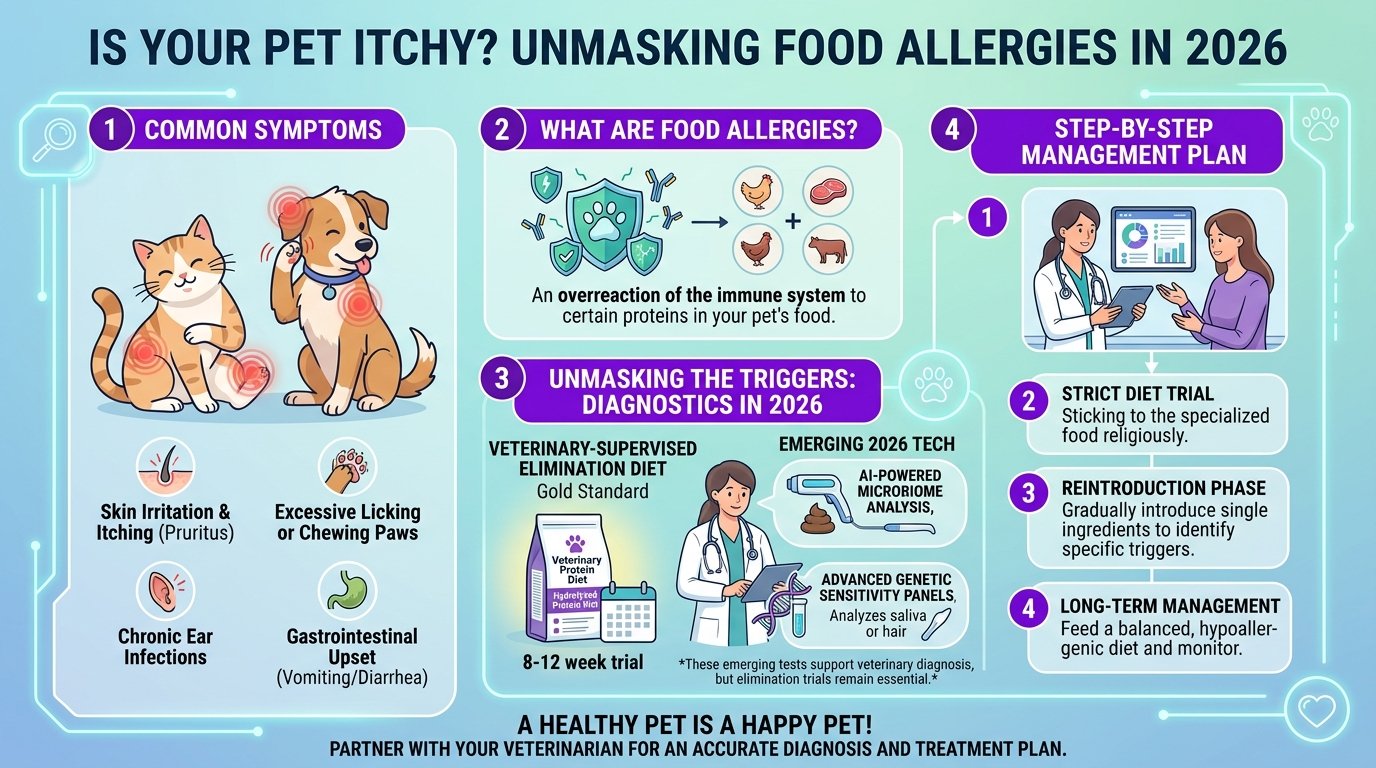
Is your beloved companion constantly scratching, licking, or suffering from digestive upset? These seemingly minor irritations can often be red flags pointing to a deeper issue: food allergies. Understanding and addressing food allergies in pets is crucial for their long-term health and happiness, especially as pet nutrition and diagnostic methods evolve rapidly.
Understanding Pet Food Allergies: More Than Just an Itch
Pet food allergies are not just a minor inconvenience; they represent an adverse reaction by your pet’s immune system to specific proteins found in their diet. Unlike food intolerances, which primarily involve digestive upset, true allergies trigger an immune response that can manifest in various ways, often making diagnosis a complex process. This immune overreaction leads to inflammation and discomfort, significantly impacting your pet’s quality of life.
The prevalence of food allergies appears to be on the rise, or perhaps, our diagnostic capabilities are simply improving. Environmental factors, genetics, and early exposure to certain ingredients can all play a role in the development of these sensitivities. It’s important to differentiate between a true allergy and a food intolerance, as the management strategies can vary significantly.
Common Signs and Symptoms of Food Allergies
Recognizing the signs of food allergies is the first step toward helping your pet. Symptoms can be diverse and often mimic other conditions, which is why a thorough veterinary examination is always recommended.
– **Skin Issues:** This is the most common manifestation. You might observe persistent itching, scratching, licking, or chewing, particularly around the paws, ears, groin, and base of the tail. Recurring ear infections, hot spots, and a dull, greasy, or flaky coat can also be indicators.
– **Gastrointestinal Problems:** Vomiting, diarrhea, excessive flatulence, frequent bowel movements, or straining to defecate can all point to dietary sensitivities. Some pets might experience chronic low-grade GI upset.
– **Respiratory Symptoms:** Though less common, some pets may exhibit coughing, sneezing, or asthma-like symptoms due to inhaled allergens, which can sometimes overlap with food-related issues.
– **Other Signs:** In rare cases, pets might show behavioral changes like lethargy or irritability due to chronic discomfort. Eye discharge or inflammation can also occur.
It’s crucial to remember that these symptoms can also be indicative of environmental allergies, parasitic infestations, or other medical conditions. Therefore, self-diagnosis can be misleading. A veterinarian’s expertise is essential to correctly identify the cause of your pet’s discomfort.
The Common Culprits: What Triggers Pet Food Allergies?
While any ingredient can potentially cause an allergic reaction, certain proteins are more commonly implicated in pet food allergies. These are often ingredients that pets are exposed to frequently over long periods. Understanding these common allergens can help pet owners and veterinarians narrow down potential triggers.
Proteins are the primary instigators because the immune system identifies specific protein molecules as threats, even if they are harmless. This misidentification triggers the allergic response. Carbohydrates, fats, and other components are much less likely to cause true allergies.
Frequent Allergenic Ingredients in Pet Foods
– **Beef:** A very common allergen in both dogs and cats, often found in a wide array of commercial pet foods.
– **Dairy:** Products containing cow’s milk can trigger reactions, especially in lactose-intolerant pets, but true dairy allergies are also seen.
– **Wheat:** A common grain, wheat can cause allergies in some pets, manifesting typically as skin or gastrointestinal issues.
– **Chicken:** Despite being a popular and often recommended protein source, chicken can also be a significant allergen for many dogs and cats.
– **Lamb:** While often suggested for sensitive pets, lamb can still be an allergen for some, especially if they have been exposed to it frequently.
– **Soy:** Used as a protein filler in many foods, soy can also be an allergen.
– **Corn:** Another common grain used as a filler, corn can contribute to allergic reactions in sensitive individuals.
– **Eggs:** Though nutritious, eggs contain proteins that can be allergenic for certain pets.
It’s important to note that a pet is unlikely to be allergic to *all* these ingredients. Typically, they will react to one or two specific proteins. The longer a pet has been exposed to a particular food, the higher the chance they might develop an allergy to one of its ingredients. This is why allergies can develop even in pets that have been on the same diet for years.
Diagnosing Food Allergies: The Elimination Diet and Beyond
Accurately diagnosing food allergies requires a methodical approach, as there is no single definitive test that can provide an instant answer. The gold standard for identifying specific dietary triggers remains the elimination diet. This process involves systematically removing potential allergens from your pet’s diet and then carefully reintroducing them to observe reactions.
Veterinary guidance throughout this process is crucial. An elimination diet is a significant undertaking that requires strict adherence and patience, typically lasting 8-12 weeks. Rushing or deviating from the plan can compromise the results and prolong your pet’s discomfort.
The Gold Standard: The Elimination Diet Protocol
1. **Select a Novel Protein and Carbohydrate Source:** Your veterinarian will help you choose a food that contains a protein source (e.g., duck, venison, kangaroo, or hydrolyzed protein) and a carbohydrate source (e.g., potato, sweet potato, peas) that your pet has never eaten before. Hydrolyzed protein diets break down proteins into such small components that the immune system doesn’t recognize them as allergens.
2. **Strict Adherence:** For 8-12 weeks, your pet must eat *only* this selected food. Absolutely no treats, table scraps, flavored medications, chew toys, or supplements unless approved by your vet. Even tiny amounts of the offending allergen can invalidate the trial.
3. **Monitor for Improvement:** During this period, carefully observe your pet for a reduction or complete disappearance of their allergy symptoms. If symptoms improve, it strongly suggests a food allergy.
4. **The Challenge Phase:** Once symptoms have resolved, your vet may recommend reintroducing single ingredients from your pet’s previous diet, one at a time, for about 1-2 weeks. If symptoms return after reintroducing a specific ingredient, you’ve likely identified the allergen.
5. **Confirming the Allergen:** Remove the reintroduced ingredient again. If symptoms resolve once more, you have confirmed the allergen. This allows you to formulate a long-term diet plan that avoids the identified triggers.
This process is time-consuming but offers the most reliable way to pinpoint the exact ingredients causing your pet’s food allergies.
Exploring Other Diagnostic Tools for Food Allergies
While the elimination diet is paramount, other tools can offer supportive information or help in narrowing down possibilities.
– **Blood Tests (IgE Serology):** These tests measure antibodies (IgE) in the blood that are specific to certain food proteins. While they can indicate sensitivities, they are not always accurate in diagnosing true clinical food allergies. A positive result doesn’t always mean a clinical allergy, and a negative result doesn’t always rule one out. They can, however, be useful for guiding initial novel diet choices.
– **Intradermal Skin Testing:** More commonly used for environmental allergies, this involves injecting small amounts of allergens under the skin to observe reactions. It is generally not considered reliable for diagnosing food allergies in pets.
– **Biopsies:** In cases of severe gastrointestinal issues, intestinal biopsies might be performed to look for inflammatory changes characteristic of food allergies, but these don’t identify specific allergens.
– **At-Home Allergy Tests:** A variety of companies offer at-home kits that claim to test for food sensitivities or allergies using hair or saliva samples. The scientific validity of many of these tests is highly questionable, and they are not recommended as a substitute for veterinary diagnosis or an elimination diet. Always consult your veterinarian before relying on such tests.
Comparison of At-Home Pet Allergy Test Kits
While professional veterinary diagnosis, particularly through elimination diets, remains the gold standard for food allergies, some pet owners seek at-home testing options to gain preliminary insights or explore sensitivities. It’s crucial to approach these with caution and always discuss results with your veterinarian. These kits often test for sensitivities rather than true IgE-mediated allergies.
| Product | Price | Pros | Cons | Best For |
|---|---|---|---|---|
| 5Strands Pet Intolerance Test | $88 – $148 | Tests for 300+ food and environmental items via hair sample. Offers broad insights into sensitivities. | Not a diagnostic tool for true allergies; results can be variable. Relies on energetic resonance. | Pet owners seeking broad sensitivity insights, not direct allergy diagnosis. |
| Allergen Test My Pet | $99 – $129 | Tests for common food and environmental allergens using a saliva sample. Relatively easy to collect sample. | Scientific validity is debated; results indicate sensitivities, not necessarily immune-mediated allergies. | Curious pet owners wanting a non-invasive look at potential triggers. |
| Nutriscan by Hemopet/Dr. Dodds | $299+ | Focuses on IgA and IgM antibodies in saliva. Developed by a respected veterinarian. | More expensive than other at-home options. Still considered a screening tool, not a definitive diagnosis. | Pet owners wanting a vet-developed screening tool for food sensitivities, in conjunction with vet advice. |
It cannot be stressed enough that these at-home kits should never replace a professional veterinary diagnosis, especially an elimination diet, for confirming food allergies. They may offer a starting point for discussion with your vet, but their accuracy in identifying clinical allergies is often limited.
Managing Pet Food Allergies: Dietary Changes and Lifestyle Adjustments
Once your pet’s food allergies are identified, effective management hinges on strictly avoiding the trigger ingredients. This typically involves a lifelong commitment to a specialized diet, but the reward is a significant improvement in your pet’s comfort and overall health. Managing food allergies effectively means constant vigilance and a proactive approach to your pet’s diet and environment.
Crafting an Allergen-Free Diet
– **Novel Protein Diets:** These diets use protein sources your pet has never encountered before, making an allergic reaction highly unlikely. Examples include duck, venison, rabbit, or kangaroo. These are available in various commercial formulations or can be prepared at home under veterinary guidance.
– **Hydrolyzed Protein Diets:** In these specialized diets, proteins are broken down into very small molecules (peptides) that are too small for the immune system to recognize as allergens. This “hides” the protein from the immune response. These are prescription diets often recommended by veterinarians for pets with severe or multiple food allergies.
– **Limited Ingredient Diets (LIDs):** While not always novel protein diets, LIDs contain a minimal number of ingredients, making it easier to identify and avoid potential allergens. It’s crucial to check the ingredient list carefully, as some LIDs may still contain common allergens.
– **Homemade Diets:** With strict veterinary supervision and a board-certified veterinary nutritionist, a homemade diet can be formulated to precisely control every ingredient. This option requires significant dedication to ensure nutritional completeness and safety. Without expert guidance, homemade diets can lead to nutritional deficiencies.
Navigating Commercial Pet Foods with Food Allergies
Reading pet food labels can be confusing, but it’s essential when managing food allergies. Look for foods explicitly labeled as “limited ingredient” or “hypoallergenic,” but always scrutinize the ingredient list. Be aware of potential cross-contamination in manufacturing facilities, even with well-intentioned brands. Some brands offer transparency about their sourcing and manufacturing processes, which can be helpful.
– **Ingredient Declarations:** Always check the primary protein and carbohydrate sources. Ensure they align with your pet’s identified non-allergenic foods.
– **”Hidden” Ingredients:** Be wary of broad terms like “animal digest,” “meat meal,” or “natural flavors,” as these can contain undeclared proteins.
– **Treats and Chews:** This is a common pitfall. Many treats contain ingredients that are problematic for allergic pets. Opt for single-ingredient treats (e.g., pure sweet potato chews) or make your own from approved diet components. Dental chews and flavored medications can also be sources of allergens.
– **Supplements:** Introduce new supplements cautiously and check their ingredient list for potential allergens. Always inform your vet about all supplements your pet is receiving.
Lifestyle Adjustments and Symptom Management
Beyond diet, certain lifestyle adjustments can help manage the symptoms associated with food allergies and improve your pet’s comfort.
– **Topical Treatments:** For skin symptoms like itching and inflammation, your vet may prescribe medicated shampoos, conditioners, sprays, or wipes to provide relief. These are palliative and don’t address the underlying cause but can make your pet more comfortable.
– **Medications:** In severe cases, corticosteroids or antihistamines might be prescribed for short-term relief of intense itching. Newer medications specifically target the itch pathway, offering effective relief with fewer side effects.
– **Environmental Control:** While food allergies are distinct from environmental ones, reducing overall allergen load can sometimes help. Keep your pet’s bedding clean and consider air purifiers if your pet also has environmental sensitivities.
– **Regular Veterinary Check-ups:** Ongoing monitoring with your veterinarian is vital to track progress, adjust the diet as needed, and address any new symptoms. Pets with food allergies may also be more prone to secondary infections, requiring prompt attention.
Living with Food Allergies: Long-Term Care and Prevention
Successfully managing pet food allergies is an ongoing journey that requires commitment and vigilance. While there’s no “cure” in the traditional sense, consistent adherence to an allergen-free diet can lead to a significant improvement in your pet’s quality of life. The long-term goal is to maintain comfort, prevent flare-ups, and ensure your pet receives optimal nutrition.
Maintaining an Allergen-Free Environment
Preventing accidental exposure to allergens is paramount. This means careful control over everything your pet eats.
– **Household Vigilance:** Educate all family members about your pet’s dietary restrictions. Ensure visitors don’t offer unauthorized treats.
– **Designated Feeding Areas:** Keep your allergic pet’s food separate from other pets’ food to avoid cross-contamination, especially in multi-pet households.
– **Outdoor Safety:** Be mindful of what your pet might ingest during walks or in the yard. Some pets are notorious for scavenging.
– **Regular Cleaning:** Keep food bowls, feeding areas, and pet toys clean to remove any lingering food residues.
The Role of Probiotics and Supplements
A healthy gut microbiome plays a crucial role in immune function. For pets with food allergies, supporting gut health can be beneficial.
– **Probiotics:** Specific probiotic strains can help restore gut balance and potentially reduce inflammatory responses. Consult your vet for appropriate probiotic supplements for your pet’s specific needs.
– **Omega-3 Fatty Acids:** Supplements containing EPA and DHA (Omega-3s) can help reduce inflammation, which is often a key component of allergic reactions. Fish oil supplements are a common source.
– **Antioxidants:** Vitamins E and C, along with other antioxidants, can support overall immune health and may help mitigate some allergic responses.
Always discuss any supplements with your veterinarian to ensure they are safe, appropriate, and won’t interact negatively with any other treatments.
Preventative Measures and Future Outlook for Food Allergies
While true prevention of food allergies can be challenging, especially given genetic predispositions, some practices might help reduce the risk or severity.
– **Early Life Nutrition:** Research is ongoing regarding the impact of early life diet on immune development and allergy risk. Providing a high-quality, balanced diet from puppy/kittenhood is always recommended.
– **Dietary Rotation (Controversial):** Some theories suggest rotating protein sources can prevent the development of allergies by limiting prolonged exposure to a single antigen. However, there is limited scientific evidence to support this as a preventative measure for true food allergies, and it can complicate diagnosis if an allergy *does* develop.
– **Holistic Approach:** Integrating conventional veterinary care with complementary therapies, such as acupuncture or herbal remedies, might be considered by some owners, but these should always be used in conjunction with and never as a replacement for, professional veterinary advice.
– **Advances in 2026:** As we look towards 2026, research into personalized pet nutrition and advanced diagnostic biomarkers continues to grow. We anticipate more refined and less invasive diagnostic tests, as well as novel therapeutic approaches that target the immune system more precisely. The goal is to move beyond mere management to more targeted interventions that can potentially modify the allergic response itself.
Ultimately, living with a pet who has food allergies means embracing a tailored approach to their care. With patience, consistent effort, and close collaboration with your veterinarian, you can ensure your furry friend enjoys a comfortable, happy, and itch-free life.
Remember, identifying and managing food allergies is a partnership between you and your vet. Don’t hesitate to seek professional advice at the first sign of discomfort. Early intervention can make a significant difference in your pet’s long-term well-being.
For more insights or collaboration opportunities, visit www.agentcircle.ai.
Frequently Asked Questions (FAQ)
Can my pet outgrow food allergies?
While some young pets might appear to outgrow certain food intolerances, true IgE-mediated food allergies are generally lifelong conditions. Consistent avoidance of the allergen is typically required to prevent symptoms.
How quickly do food allergy symptoms appear after exposure?
Symptoms of food allergies can appear within minutes to hours after ingestion, but sometimes they can be delayed by several days, making it challenging to pinpoint the exact trigger without an elimination diet.
Is grain-free food always best for pets with food allergies?
Not necessarily. While grains like wheat or corn can be allergens for some pets, many pets are allergic to protein sources (e.g., chicken, beef) rather than grains. Grain-free diets are not inherently superior for allergy management unless a specific grain allergy is confirmed. In fact, some grain-free diets have raised concerns regarding potential links to heart disease, so always discuss dietary choices with your vet.
Can food allergies in pets be genetic?
Yes, there appears to be a genetic predisposition to developing allergies, including food allergies, in certain breeds. For example, breeds like Labrador Retrievers, Golden Retrievers, German Shepherds, and West Highland White Terriers are often cited as being more prone to allergies.
What’s the difference between a food allergy and food intolerance?
A food allergy involves an immune system response to a protein, causing symptoms like itching, skin inflammation, or severe gastrointestinal upset. A food intolerance is a non-immune reaction, typically affecting digestion and leading to symptoms like vomiting or diarrhea, but usually not skin issues. Lactose intolerance is a common example of food intolerance.
 PRINCE2030